

Wondering if Playa del Carmen real estate is a smart move in 2026? This straightforward walkthrough covers what drives demand, how to run rental numbers, the legal path for foreigners, taxes, risks & protections, and neighborhoods to watch. You’ll get practical steps, credible data sources, and example tools to decide with confidence.
Table Of Contents
- Rental income and operating math: seasonality, benchmarking with AirDNA, and realistic net after expenses
- Buying process, legal and taxes: how foreigners purchase, close, hold, and report
- Risks & mitigations: model them before you buy
- Neighborhood fit & exit outlook: where the demand lives and how to think about a 3–7 year hold
- Conclusion
- Related Posts
- Frequently Asked Questions (FAQs)
Key Takeaways
- Tourism stays strong in 2026; access via Cancun, the Maya Train, and Tulum International Airport keeps visitors coming
- Do the rental math: check ADR & occupancy with AirDNA; subtract HOA and utilities, 20–30% management, cleaning, trust bank fees, insurance, and taxes—then stress test for winter highs and softer summers
- Know the steps: fideicomiso (bank trust) for foreigners, a Notario Público validates title; expect closing costs, low predial, report rental income to SAT, and follow condo rules
- Risks exist—hurricanes, sargassum season, pockets of oversupply, and peso swings; use strong insurance, inspections, reserve studies, conservative debt… and keep a cash buffer
- Buyplaya is the premier real estate broker for foreign investors in the playa del carmen, tulum, and riviera maya of Mexico—successfully assisting clients for over 20 years purchasing homes, condos, investment, beachfront, and commercial properties in Mexico
Market snapshot 2026: is Playa del Carmen real estate a good investment right now—tourism‑driven demand, improving connectivity via Cancun hub and likely benefits from the Maya Train corridor & Tulum Intl Airport, USD‑MXN currency dynamics that can favor dollar earners, limited earlier search findings so rely on verifiable tourism, inflation & population indicators to frame cap rates and price momentum
Tourism‑driven demand signals to watch
Playa del Carmen remains a tourism-first market. That matters because short‑term rental income and second‑home liquidity both hinge on visitor flow. Instead of cherry‑picked anecdotes, use consistent sources:
- SECTUR publishes national travel trends and international air arrivals. Scan quarterly updates at SECTUR to confirm momentum in Mexico’s Caribbean.
- Quintana Roo’s SEDETUR tracks hotel occupancy, average rate trends, and visitor mix for the Riviera Maya specifically. Check dashboards and press bulletins at SEDETUR Quintana Roo.
- Mexico’s census and surveys can show population growth and labor participation in Solidaridad (the municipality for Playa). Pull urbanization and demographic context at INEGI.
What to look for:
- Steady or rising passenger arrivals into Cancun (CUN) and Tulum (TQO).
- Occupancy holding through shoulder seasons, not just winter peaks.
- A healthy split of domestic and international tourists. More domestic demand can stabilize off‑peak months.
If those three keep trending well in 2026, it usually supports ADR resilience and resale depth.
Connectivity: Cancun hub, Tulum International Airport, and the Maya Train
CUN remains the primary international gateway with varied nonstop lift. Tulum International (Felipe Carrillo Puerto) is expanding routes and shortens transfer times for South Riviera Maya guests. The Maya Train is rolling out service segments that may redistribute visitor traffic within the peninsula. You don’t need the train to be perfect for it to be helpful; even partial operational reliability can increase regional mobility and day‑trip spend. Buyers targeting family‑friendly product or resort‑style condos tend to benefit most from easier access.
For Playa specifically:
- Access from CUN is still fastest and most predictable today. Door‑to‑door transfers are well established.
- TQO narrows the advantage for Tulum, but it also strengthens the entire corridor’s visibility. Some spillover to Playa occurs when guests split trips.
- A working rail corridor can diversify feeder markets over time. Monitor route timetables and ridership updates via official transport releases and local press. For now, model your rental forecasts assuming “nice to have,” not “must have.”
USD‑MXN dynamics and inflation: tailwinds for dollar earners
Cap rates are quoted in pesos on the ground. Operating costs (HOA, utilities, labor) are largely peso‑based, while a significant slice of your rental revenue may be in USD. When the peso is stable or modestly weak relative to USD, dollar earners often see better net yields after conversion. Inflation direction matters too, because utilities, maintenance, and services adjust.
Use Banco de México to:
- Track inflation releases and policy rate moves; they influence borrowing costs, developer financing, and peso strength.
- Follow the USD/MXN series to understand your effective yield in home‑currency terms.
Practical tip: Underwrite in pesos first. Then convert to your base currency at a conservative rate so you’re not back‑solving with optimistic FX.
What “price momentum” and cap rates mean here
Playa del Carmen has micro‑markets. Ocean‑adjacent buildings with proven STR track records price differently than pre‑sale projects a few blocks inland. Rather than rely on slogans, build a simple framework:
- Stabilized vacation rentals in central/walkable locations historically pencil into mid‑single to high‑single‑digit cap rates, net of realistic management and HOA costs, when purchased at fair market value.
- New supply can push down occupancy or ADR within a few blocks for a cycle. Quality assets with strong amenities tend to defend ADR better.
- Buyer depth is strong in Playacar and in certain Centro corridors because end‑user demand stacks with investor demand.
When you evaluate a specific property, replace generic “market cap rate” talk with actual underwriting: last 12 months ADR/occ, forward bookings, HOA/utilities, and actual management contract terms. Then compare that net against all‑in basis (price + closing + furniture + set‑up).
Verifiable indicators to keep handy
- Hotel occupancy trend lines from SEDETUR for Riviera Maya.
- Inflation, rate announcements, and FX from Banxico.
- Mexico arrival trends and Riviera Maya positioning in SECTUR releases.
- INEGI for employment and population growth in Solidaridad, supporting the services base.
If these stay constructive in 2026, Playa del Carmen remains attractive for yield‑focused investors who buy right and operate professionally.
Rental income and operating math: seasonality, benchmarking with AirDNA, and realistic net after expenses
Seasonality pattern you should plan for
The snowbird wave (roughly December–April) plus spring holidays typically produce the highest occupancy and ADR. May–June sees a modest dip, summer fills with family travel but at slightly softer ADR, and late August–October is the slowest—also the peak of hurricane season and sargassum risk windows on some beaches. November usually rebuilds demand.
A simple planning view (illustrative, not a forecast):
| Month | Demand tendency | Notes |
|---|---|---|
| Dec–Apr | High | Peak ADR and occupancy; longer stays common |
| May–Jun | Moderate | Shoulder; adjust min‑stays and promos |
| Jul–Aug | Moderate | Families and regional travel; value packs work |
| Sep–Oct | Low | Weather risk window; maintenance downtime |
| November | Building | Events and early snowbird arrivals |
Structure your cash flow to handle two softer months. Use those for deep cleaning, repairs, and FF&E refresh.
Benchmark ADR and occupancy with AirDNA
Short‑term rental performance is block‑by‑block. Tools like AirDNA can help you sanity‑check underwriting.
How to use it quickly:
- Enter the building’s address or draw a radius around the micro‑neighborhood (e.g., Coco Beach vs. Playacar Fase II).
- Filter to unit type (studio, 1BR, 2BR) and amenity matches (pool, gym, beachfront).
- Pull trailing 12‑month ADR, occupancy, RevPAR, and seasonality curves.
- Compare Superhost/”Professional” operators to broad averages. The pro cohort often sets the ceiling you can target with good ops.
- Export data or screenshot charts for your investment memo.
Reality check: If your pro forma exceeds the 75th percentile of similar comps without a concrete operational edge (brand, view premium, on‑site staff), trim your ADR by 5–10% before you trust it.
Operating expenses to budget (line‑by‑line)
This is where many buyers under‑estimate. At minimum, model:
- HOA dues (varies by amenities and building age)
- Utilities: electricity (A/C heavy in summer), water, gas
- Internet/TV
- Repairs/maintenance and a furniture reserve
- Short‑term rental management (20–30% of gross, sometimes plus VAT)
- Cleaning/linen turnovers and consumables
- Platform/channel fees if applicable
- Accounting and annual bank trust (fideicomiso) fee if you’re in the restricted zone
- Annual property tax (predial)
- Insurance (property + hurricane/wind, and liability)
- Annual permits or municipal lodging documentation where required
Quick note on taxes: Rental income in Mexico is taxable. More below in the legal section—just know you must model it.
Permits and condo bylaws
Playa buildings differ in how they handle STR:
- Some condominiums allow nightly rentals with registration and on‑site rules.
- Others limit minimum stays (e.g., 30 days) or require a guest registry.
- A few buildings either discourage or prohibit STR.
Before you go firm:
- Read the condo regime and bylaws.
- Confirm with the administrator what the current practice is, and if the assembly is considering changes.
- Understand municipal licensing where applicable for tourist lodging.
If your plan is monthly stays only, it’s simpler on operations and often reduces wear and tear.
Nightly vs. monthly stays for yield stability
| Factor | Nightly STR | Monthly (30+ days) |
|---|---|---|
| Gross yield potential | Higher at peak | Lower headline; steadier |
| Seasonality impact | High | Moderated |
| Wear & tear | Higher | Lower |
| Management intensity | Higher (turnovers, messaging) | Lower |
| Regulatory/HOA friction | Sometimes higher | Often lower |
| Ideal units | Studios, 1–2BR near 5th Ave or beach | 1–2BR with good Wi‑Fi and workspace |
Many investors run a mixed strategy: nightly in high season, monthly in shoulder months, then maintenance in the slowest period.
A simple underwriting template you can reuse
Plug these steps into a spreadsheet:
- Inputs:
- ADR by month (from AirDNA comps and your building’s history)
- Occupancy by month
- HOA monthly
- Utilities monthly (weighted higher in summer)
- Management fee (as % of gross or flat + %)
- Cleaning cost per turnover and expected stays/month
- Insurance, trust fee, accounting (annual; allocate monthly)
- Platform fees (as % of gross)
- Monthly revenue = ADR × nights booked.
- Monthly expenses = HOA + utilities + management + cleaning + platform fees + allocated annual costs.
- Net Operating Income (NOI) = Revenue – Expenses.
- Cap rate = Annual NOI / Total all‑in cost (purchase + closing + furnishings + initial repairs).
- Stress test: reduce occupancy by 10 points & ADR by 5–10% to see break‑even.
That last step—stress testing—is not optional. Assume one adverse season every few years.
Buying process, legal and taxes: how foreigners purchase, close, hold, and report
Foreigners buying near the coast: the fideicomiso
Property along Mexico’s coasts and borders lies in the restricted zone. Foreigners typically acquire through a bank trust (fideicomiso) with a Mexican bank as trustee, the buyer as beneficiary, and full rights to use, lease, finance, or sell. The trust term is renewable.
See the Ministry of Foreign Affairs (SRE) for official context on trusts and permits: SRE/Foreign Affairs. Your Notario and bank trustee will manage the specific trust deed.
A quick thought: Many long‑time investors use fideicomisos without issue. Ask the trustee bank for its current annual fee and renewal policies.
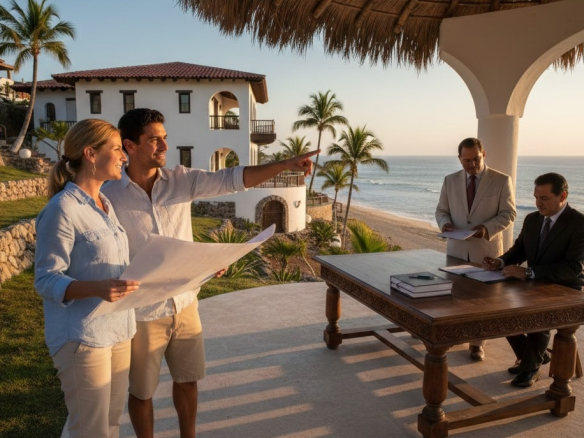
Step‑by‑step: a practical path to closing
- Engage your broker and counsel
- Use a local, bilingual team with coastal transaction experience. If you’re still choosing legal counsel, this overview can help: How to find a good real estate attorney in Playa del Carmen.
- Offer and reservation
- Negotiate price, inclusions (furniture list), timeframes, and contingencies. Reserve the unit with a small deposit into an escrow or stakeholder account outlined in your agreement.
- Due diligence
- Notario Público verifies title chain, liens, cadastral status, and property tax status.
- Your attorney reviews the condo regime/bylaws, HOA minutes, and any pending assessments.
- Technical inspection for construction quality and systems (HVAC, plumbing, waterproofing).
- Trust and permits
- The Notario coordinates with the bank to open the fideicomiso. Foreign Affairs permit paperwork is managed through the Notario/bank.
- Closing costs and signatures
- You’ll fund your balance plus closing costs. The Notario formalizes the deed (or trust assignment) and records it. You receive registered copies after filing.
- Post‑closing set‑up
- Transfer utilities, enroll in HOA, set your management and accounting, secure STR permits where needed, and configure insurance.
Timing varies—preparation is key. Good files close smoother.
Closing costs and ongoing costs (what to expect conceptually)
Without quoting numbers that change by property and municipality, plan for:
- Notario fees and public registry costs
- Acquisition tax and municipal/recording fees
- Bank trust set‑up and first annual fee (if applicable)
- Appraisal/cadastral services
- Legal and due‑diligence fees
- Escrow/stakeholder service (if used)
Ongoing:
- Annual bank trust fee (if applicable)
- Predial (property tax) annually—relative to North America, it is commonly low per value, but confirm the current rate with the municipality of Solidaridad
- HOA dues
- Insurance
- Accounting and tax filings
Taxes and reporting: SAT basics for rental owners
- Registration: You must register with Mexico’s tax authority (SAT) and obtain an RFC to report rental income. A local accountant can handle monthly filings and VAT/ISR where applicable.
- Income tax: Rental income is taxable in Mexico. Exact regime depends on your structure and whether you operate as an individual or entity. Keep clean bookkeeping.
- Withholding: If you use platforms or foreign payors, confirm any withholding mechanics and ensure credits are tracked.
- Double taxation: Speak with your home‑country CPA about foreign tax credits. Keep your Mexican CFDI invoices organized.
Use official sources for rule changes and rates, and monitor Banxico for macro inputs that could affect costs.
HOA governance really matters
Read the bylaws, the reserve study (if available), and past assembly minutes:
- Are there extraordinary assessments planned?
- What’s the building’s reserve contribution and target?
- Are STRs normalized and well managed, or is there ongoing friction?
A stable HOA with transparent financials often protects your asset more than a small price discount ever will.
Useful professionals and tools
- Local real estate attorney and Notario
- Vacation rental manager with building‑specific references
- Insurance broker familiar with hurricane/wind coverage
- Accountant handling SAT filings and digital invoicing
- Data tools like AirDNA for underwriting and a simple monthly P&L template
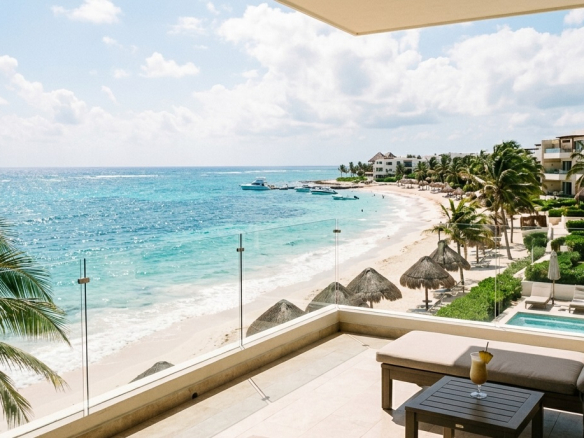
If your strategy includes beachfront exposure, read this context on pricing, wear, and demand patterns: Is a beachfront condo in Playa del Carmen a good investment?
Risks & mitigations: model them before you buy
Weather exposure and insurance
The Caribbean carries hurricane risk. Lenders, HOAs, and professional operators treat storm preparation as standard:
- Insure for wind, water, and named storms, not just basic fire. Confirm deductibles and exclusions.
- Verify building envelope specs (windows, waterproofing, drainage). Ask for any engineering or maintenance reports.
- Keep a storm plan with your manager for shutters, terrace furniture, and post‑storm inspections.
Budget outages: Not every season is perfect. Two soft months in a year isn’t failure—it’s planning space.
Sargassum and beachfront ADR
Sargassum landings vary by season and currents. Beachfront product can command premium ADR in clear‑water months and soften during heavy landings. What helps:
- Buildings with pools, rooftops, and club access can preserve value when the beach is less usable.
- Proactive beach cleaning varies by zone; ask the HOA and neighbors how it’s handled historically.
- Pricing strategy: flexible nightly minimums and added‑value packages off‑peak.
For broader tourism patterns that may reflect sargassum season impacts, watch monthly notes from SEDETUR Quintana Roo.
Supply risk and micro‑market competition
In certain corridors, new projects come online in batches. That can:
- Increase comp inventory and push down occupancy/ADR for a few seasons.
- Create incentives and rate wars among similar buildings.
Mitigation:
- Prefer properties with unique advantages: corner views, rooftops, true walkability, fitness/spa, kids’ areas, or on‑site food and beverage.
- Join buildings with serious HOA governance and preventive maintenance.
Currency swings and cash management
If your expenses are in MXN and much of your revenue is in USD, you carry implicit FX exposure. Simple practices:
- Model NOI in pesos first. Convert conservatively when showing returns in USD, CAD, or EUR.
- Hold a small MXN reserve for HOA and utilities to avoid forced conversions at bad moments.
- If your home country’s currency is volatile, consider staged conversions through the year.
Monitor inflation and peso direction at Banco de México. Don’t speculate—underwrite with a margin of safety.
Construction quality variance and due diligence
Finishes and MEP systems vary widely between developers and even between phases of the same project. Do not skip:
- Independent inspection focusing on waterproofing, HVAC sizing, electrical load, and soundproofing.
- Reviewing warranties and as‑built plans.
- Asking the HOA about recurrent issues (elevators, pumps, roof membranes).
If you’re buying pre‑owned, check for humidity lines, balcony slope, and window seals. And… test every A/C.
Stress‑test your yield
Before you commit, run three scenarios:
- Base case: ADR/occ from AirDNA pro comps; current HOA and utility averages; management at 25%.
- Downside: Occupancy –10 points, ADR –8%, utilities +10% (summer A/C), one extra deep maintenance month every three years.
- Upside: ADR +5% due to amenity edge, occupancy +5 points with professional operations.
If your investment only works in the upside case, it’s not conservative enough for a 2026 purchase.
Neighborhood fit & exit outlook: where the demand lives and how to think about a 3–7 year hold
Micro‑areas in Playa del Carmen
Each pocket attracts a different guest profile, which drives ADR and marketing:
- Centro/5th Avenue (Quinta Avenida)
- Pros: Walkability, dining, nightlife, easy beach access from many blocks.
- Consider: Noise in certain strips; STR competition is highest here.
- Playacar (Phase I and II)
- Pros: Gated, beach access, golf, family appeal, resale depth with end‑users; stronger HOA norms.
- Consider: Fewer budget travelers; buyers expect quality finishes.
- Coco Beach and Zazil‑Ha
- Pros: Quieter vibe north of Centro, emerging rooftops, beach clubs; good for digital nomads and couples.
- Consider: Building‑by‑building quality variation; streets can be mixed-use and evolve quickly.
- Gonzalo Guerrero/downtown fringe
- Pros: Value pricing relative to beachfront; local services.
- Consider: Due diligence on block‑level safety, noise, and future construction.
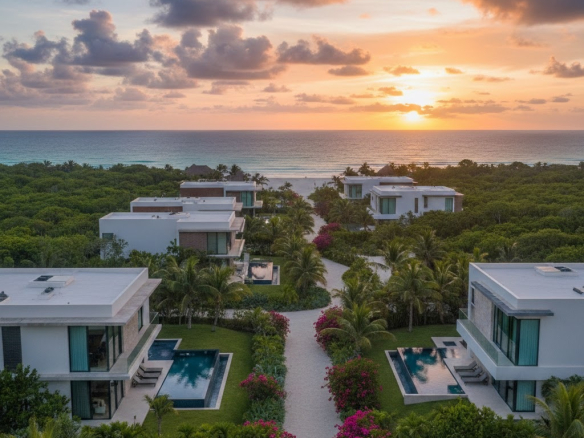
- Resort communities just north (e.g., Corasol/Mayakoba area)
- Pros: Amenity‑rich, branded services, family demand, event draw.
- Consider: Higher HOAs; rules for STR vary; some units appeal more to longer stays and ownership use.
Match your target guest to the location first. Then choose the building.
Who rents where (and why)
- Short stays and nightlife seekers: Centro near 5th Ave, studios and 1BRs with rooftops.
- Families: Playacar, resort‑oriented communities with pools, kids’ spaces, and beach ease.
- Digital nomads/remote workers: Coco Beach/Zazil‑Ha with good Wi‑Fi, quiet evenings, walkable cafes.
- Premium beach club access seekers: Ocean‑adjacent or rooftops with views, even if the beach is a short walk.
If you’re leaning beachfront for ADR premiums and photos, review practical considerations about maintenance and seasonality here: Is a beachfront condo in Playa del Carmen a good investment?
Exit outlook and who your future buyer could be
Think in terms of buyer pools:
- Investor‑operators who value proven NOI and turnkey furnishings.
- Hybrid users (snowbirds) who want two months of owner stays plus cash flow.
- End‑users in Playacar and resort communities who prioritize space and quiet over nightly rental flexibility.
Units with:
- Clean title, recent reserve studies, and transparent HOA records
- Documented rental history and P&L
- Durable finishes and recent FF&E refresh
tend to exit faster and closer to ask.
Three common exit routes:
- Brokered resale to the next investor or hybrid owner
- Sale within the building’s community (word spreads when a top‑performing stack line is available)
- 1031‑like timing strategies don’t apply here for U.S. tax deferral; plan with your tax advisor accordingly
Value‑add opportunities that actually move the needle
- Furnishing and theming for your exact guest avatar (e.g., kid‑friendly packs, blackout shades, crib/highchair)
- Pro photography and brand standards (cohesive listing copy, amenities list, floor plan)
- Concierge partnerships (airport transfers, tours, chef services) that lift ADR and reviews
- Smart locks, noise monitors, and energy‑saver switches to reduce wear and power costs
- Adding a workstation and redundant high‑speed internet for mid‑term stays
Keep receipts and before/after photos; they are persuasive at resale.
Planning your 3–7 year hold
- Underwrite for at least one soft tourism year in that window (macro cycles happen).
- Budget a mid‑cycle refresh: paint, linens, small appliances, outdoor furniture—these drive reviews.
- Track local policy shifts on lodging. Build flexibility to pivot to monthly rentals if needed.
- Re‑shop insurance annually and verify hurricane endorsements.
- Revisit FX assumptions yearly. If USD strengthens, consider accelerating MXN prepayments (HOA, insurance) while favorable.
Cross‑checking demand during your hold
- Watch Riviera Maya occupancy and RevPAR color in SEDETUR Quintana Roo publications.
- Follow national arrival trends and source markets via SECTUR.
- Use INEGI for updates on local employment and population that support service availability and cost structures.
Working with a broker who caters to foreign investors
A seasoned Playa del Carmen brokerage that regularly serves international buyers can help you:
- Screen buildings for STR‑friendliness, HOA strength, and resale track record
- Negotiate furniture packages and snag‑lists with developers and sellers
- Coordinate Notario, bank trust, inspections, and insurance
- Validate rental comps with local managers and present a realistic pro forma
And if you still need to assemble your legal team, keep this at hand: How to find a good real estate attorney in Playa del Carmen.
Quick underwriting checklist you can copy into your notes app
- AirDNA comps saved (ADR/occ charts)
- HOA bylaws, latest assembly minutes, reserve info
- Unit inspection report and punch list
- Insurance quote with storm coverage
- Manager proposal (fee, services, SLAs)
- SAT/Accounting plan (RFC, monthly filings)
- Fideicomiso cost schedule and trustee contacts from SRE‑compliant bank
- FX assumption and stress‑test case
- Two seasonality plans: nightly vs monthly shoulder strategy
- Exit notes: likely buyer profile and value‑add plan for year 1–2
Finally, keep an eye on policy updates and macro moves using primary sources like SRE, Banco de México, SECTUR, SEDETUR Quintana Roo, and INEGI. These are the same references seasoned Playa del Carmen investors consult before committing new capital.
Conclusion
Playa del Carmen can be a smart 2026 move—if demand, access and numbers align. Validate tourism rents, include HOA, trust and taxes, stress-test seasonality & storms. Pick right neighborhood and exit. Start today. Buyplaya Real Estate Advisors is the premier real estate broker for foreign investors in the playa del carmen, tulum and the riviera maya of Mexico, successfully assisting clients for over 20 years purchasing homes, condos, investment, beachfront and commercial properties in Mexico.
Related Posts
- Is A Beachfront Condo In Playa Del Carmen A Good Investment
- How To Find A Good Real Estate Attorney In Playa Del Carmen
- Playa del Carmen Real Estate Listings
Frequently Asked Questions (FAQs)
Is Playa del Carmen real estate a good investment in 2026 for short-term rentals?
Yes, if your numbers work. Tourism stays strong, and winter plus spring breaks usually push higher occupancy & ADR, while summer can dip. Run net math after HOA, utilities, 20–30% management, cleaning, trust bank fees, and insurance; then stress test at lower occupancy just in case. Check building rules for STRs, local permits, and have a plan for hurricanes and sargassum days. If the net still looks solid, Playa del Carmen real estate can be a good investment in 2026.
What numbers do I need to check to decide if Playa del Carmen real estate is a good investment in 2026?
Start with realistic rent (nightly or monthly), expected occupancy, and seasonality. Subtract HOA, property tax (predial), maintenance, reserves, cleaning, management, trust fees, and internet & electricity—don’t forget closing costs and furniture. From there, calculate NOI and cap rate, and compare to your financing rate. If your after‑tax cash return beats your hurdle and you’re comfortable with the risk, it’s likely a yes.
Which areas make Playa del Carmen real estate a good investment in 2026?
Match area to strategy. Centro and near 5th Ave can win on walkability and turnover; Playacar has stronger resale depth, quieter vibe, plus golf; Coco Beach and north end often draw longer stays and remote workers. Beachfront can lift ADR but needs stronger insurance and reserves. If you plan monthly rentals, being a bit off 5th can cut noise and still rent well.
How does the USD–MXN exchange rate affect whether Playa del Carmen real estate is a good investment in 2026?
If you earn in USD and many costs are in MXN, a stronger dollar can help your margins. Rents often price in USD for tourist stays, but bills like HOA or services may be in pesos—track both. Keep a small cash buffer in MXN, and price check contracts twice a year; tiny changes add up. If the peso strengthens, your expenses rise in USD terms, so revisit your rates and costs.
Why choose Buyplaya if I’m asking: is Playa del Carmen real estate a good investment in 2026?
Because local experience reduces mistakes. Buyplaya is the premier real estate broker for foreign investors in the Playa del Carmen, Tulum, and Riviera Maya of Mexico—successfully assisting clients for over 20 years purchasing homes, condos, investment, beachfront, and commercial properties in Mexico. We help you source real comps, read condo bylaws, validate rental potential, and navigate fideicomiso and closing with fewer surprises. That’s how you turn “is it good?” into a clear yes or no, with confidence.

Join The Discussion