
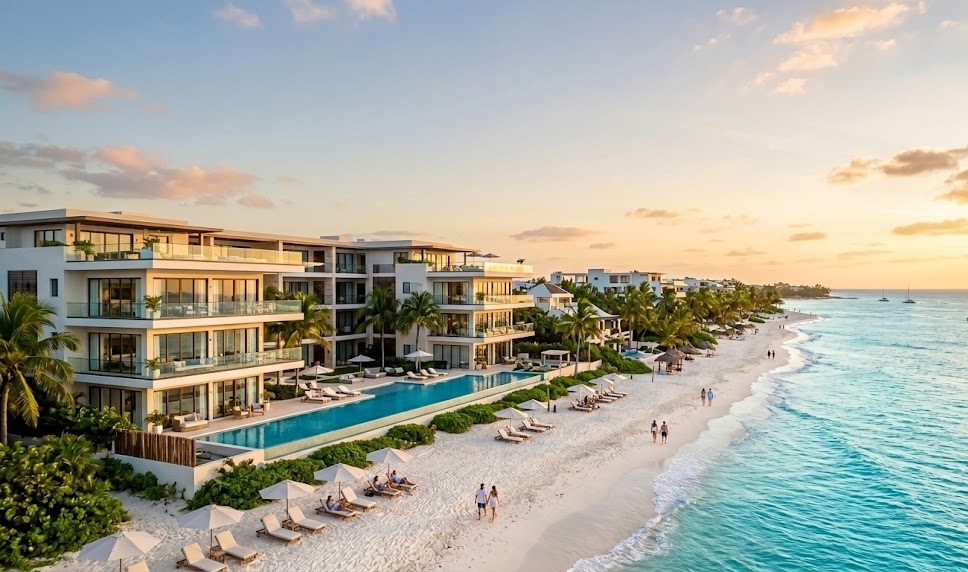
Thinking about owning a true beachfront place in Playa del Carmen? This overview walks you through where to look, how buying works for foreigners, what costs to expect, and the smart checks to make before you sign. Clear steps, practical tips, and local context—so you can move from browsing to confident action with ease.
Table Of Contents
- Market Snapshot & Where to Look
- Buying Steps & Legal Essentials
- Costs, Financing & Ownership
- Lifestyle, Rental Potential & Risk Checks
- Resources for Accuracy & Next Steps
- Conclusion
- Related Posts
- Frequently Asked Questions (FAQs)
Key Takeaways
- True beachfront is limited and pricey; focus on Playacar Phase I, Coco Beach, 38th St, and North Playa—walk the area morning and night for noise, crowds, and beach condition
- Foreign buyers use a bank trust (fideicomiso); your path is simple: offer → promissory → Notario checks → escrow → deed signing—keep every doc in writing, always
- Budget 5–8% for closing costs, plus annual trust fees, HOA, hurricane insurance and furnishings; renting? get an RFC and follow SAT rules to stay compliant
- Do smart checks: clean title, liens & permits, condo regime, HOA reserves; confirm elevator and generator service, water pressure, fiber internet, and the building’s hurricane plan
- Buyplaya is the premier real estate broker for foreign investors in Playa del Carmen, Tulum, and the Riviera Maya—successfully helping clients for 20+ years purchase homes, condos, investment, beachfront and commercial properties in Mexico. We handle vetted options and smooth closings so you don’t stress
Market Snapshot & Where to Look
True beachfront condos in Playa del Carmen are scarce and priced at a premium. Most listings that say “beachfront” are actually ocean-view or second row. If your search turns up zero this week, that’s normal. Inventory moves fast, and some opportunities are off-market or not yet uploaded. We maintain on-the-ground verification to confirm whether a unit is truly on the sand, what the access rights look like, and how healthy the HOA’s finances are.
Here’s how to frame the search:
- Beachfront vs ocean view: “Beachfront” means your building is directly on the maritime federal zone with physical beach access. Many second-row options have great views, but you’ll cross a street or a beach club to reach the sand.
- Building age and wind resistance: Older, low-density buildings often have thicker concrete, simpler systems, and quieter profiles. Newer builds add rooftop pools, gyms, elevators, and smart access. Ask about hurricane-rated windows and doors, roof membranes, and maintenance history—salt air and wind matter here.
- Noise zones: The club zone near 10th–12th Street and parts of central 5th Avenue can be lively late. The 38th Street corridor is calmer, and Playacar Phase I is quietest for true beachfront.
- Amenities vs value: Rooftops, gyms, coworking, and full-service lobbies do well with renters, but older beachfront gems with larger floor plans can hold value better over time.
Playacar Phase I (true beachfront, low density)
Playacar Phase I is the benchmark for Playa del Carmen beachfront living. It’s a gated, low-density residential area with a mix of villas and low-rise condos fronting a wide beach. You’re just south of the Cozumel ferry pier but tucked away from nightlife noise.
- Beach access is direct; you’ll feel the sand underfoot within minutes of leaving your door.
- Expect older buildings with larger footprints, upgraded over time. Many have proven hurricane resilience.
- Values are resilient due to limited supply and a high bar for the setting. Rental demand is reliable, especially for families and long stays.
- HOA rules are usually well-enforced. Ask about short-term rental policies; some buildings may limit nightly rentals to protect peace and quiet.
The 38th Street Corridor
38th Street leads from 5th Avenue to the beach through a lush canopy of palms and tropical growth. It is one of the prettiest pedestrian streets in town.
- You’ll find boutique buildings with rooftop pools, gyms, and staffed lobbies. It’s not always “on the sand,” but many condos are steps to the beach and have angled ocean views.
- The vibe is calmer than the club zone, with upscale dining and low-key cocktail bars rather than nightclubs.
- Newer construction means better glazing, modern elevators, and fiber connections. Still, verify window specs and generator capacity for storms.
Coco Beach
Coco Beach sits just north of 38th Street with a mix of mid-rise buildings and beach clubs.
- Access to the sand is easy; some buildings claim beachfront, but double-check the setback and pathway across the maritime zone or beach club.
- Rooftops can offer strong views across the reef line. Winds can be higher; confirm sliding door quality and balcony drainage.
- Nightlife is milder than central 5th Avenue but still active. Noise can travel from certain beach clubs on weekends.
North Playa (CTM to Colosio and beyond)
As Playa grows north, you’ll see more modern projects with ocean-view rooftops and quick beach access.
- True frontline beachfront is rare in central North Playa. Many second-row buildings market “beachfront lifestyle” because access is short and views are solid from upper floors.
- Streets are wider and daytime energy is lighter here; nights are quieter compared with the 12th Street zone.
- Some pockets are still developing. Verify street lighting, sidewalk conditions, and active construction nearby if you plan to be there this season.
Centro and the Club Zone
Close to the ferry pier and the 12th Street nightlife area, this location rents aggressively in high season.
- You’ll find a few older oceanfront buildings and many ocean-view rooftops. True beachfront is limited and can be busy.
- Expect energetic nights; do a late-night walk test on Thursday–Saturday to check sound bleed.
- Premiums for view are balanced by noise and club-adjacent traffic. Units do well for shorter, party-friendly stays.
Quick Comparison
| Area | True Beachfront Potential | Typical Views | Noise Profile | Building Age/Amenities | Rental Appeal |
|---|---|---|---|---|---|
| Playacar Phase I | High | Direct oceanfront | Very quiet | Older, low-density; upgrades vary | Strong family and long-stay demand |
| 38th Street Corridor | Medium (steps to sand) | Partial to good | Calm to moderate | Newer; rooftops and gyms common | Consistent, higher ADR near 5th Ave |
| Coco Beach | Medium (verify access) | Strong from rooftops | Moderate; weekend beach clubs | Newer; modern systems | Good for couples and digital nomads |
| North Playa (CTM–Colosio) | Low to medium | Good from upper floors | Quieter nights | Newer; some ongoing development | Growing; value plays possible |
| Centro/Club Zone | Low (limited spots) | Good but busy | Lively, late-night noise | Mix of older and mid-age | High occupancy, shorter stays |
Note on verification: Photos can exaggerate views and crop out neighboring structures. Arrange an in-person or live video walk-through to confirm view corridors, beach access routes, and mechanical systems. We also pull HOA financials, minutes, and reserve studies where available before an offer goes firm.
If you want a quick scan of what’s publicly visible today, check the current Playa del Carmen beachfront condos page: Playa del Carmen beachfront condos. Inventory changes daily; we keep a list of quiet opportunities that owners prefer not to publish.
Buying Steps & Legal Essentials
We’ve been closing beachfront condos for international buyers in Playa del Carmen for over 20 years. The process is straightforward if you follow a clean sequence and use the right professionals.
Step 1 — Define “beachfront” and your must-haves
Agree on what beachfront means to you: direct sand access, first-row building, or upper-floor ocean view with a short walk. List non-negotiables (view angle, elevator, generator, fiber internet, rental-friendliness).
Step 2 — Make an offer
- Your advisor drafts a bilingual offer with price, inclusions (furniture, parking, storage), timelines, contingencies, and escrow details.
- You’ll typically wire an earnest deposit to a licensed third-party escrow, not to a private individual.
- Ask for a seller disclosure of known defects and a current HOA account statement.
Step 3 — Promissory contract (Contrato de Promesa)
Once terms are agreed, parties sign a promissory contract to lock in the deal while due diligence is completed.
- Sets timelines for due diligence, fideicomiso setup (if needed), completion, and penalties for default.
- Defines escrow instructions and release triggers.
- If you’re buying pre-construction, this contract also sets the stage payment schedule and delivery conditions.
Step 4 — Due diligence with the Notario Público
The Notario is a state-appointed attorney who validates property transfers. You do not skip this step.
- Title search at the Public Registry (Registro Público de la Propiedad y del Comercio): confirms chain of title, liens, encumbrances, and the property’s legal description.
- Verify the Condominium Regime (Régimen de Propiedad en Condominio): ensures the building is legally constituted and your unit’s fractional share and common areas are registered.
- Confirm municipal construction permits and land-use (uso de suelo). For newer buildings, confirm occupancy authorization and that utilities are properly contracted.
- Check for unpaid HOA fees, utilities (CFE electricity and water), and property taxes (predial). These should be cleared before closing or settled at closing.
Step 5 — Foreign buyers and the fideicomiso (bank trust)
Because Playa del Carmen sits within Mexico’s restricted zone (coasts and borders), foreigners typically acquire residential property via a bank trust called a fideicomiso.
- A Mexican bank holds legal title for your benefit. You remain the beneficiary with full rights to use, lease, sell, or will the property.
- The trust term is commonly 50 years, renewable.
- Setup and annual fees vary by bank and property value; your Notario will quote current costs and timeframes.
- If you are purchasing for active commercial purposes, or plan multiple acquisitions, tailored legal structures may be considered—speak with counsel.
Learn the restricted-zone basics and trust language directly from the SRE: Secretaría de Relaciones Exteriores (SRE).
Step 6 — Escrow and funds control
- Use a reputable third-party escrow that provides a segregated account, KYC, and two-signature release.
- Confirm wire instructions by phone using a known number. Use two-factor authentication with your bank and keep SWIFT receipts.
- Set clear release milestones: usually upon Notario’s confirmation that all conditions are met and the deed is ready to sign.
Step 7 — Pre-construction safeguards (if applicable)
Buying from plans can work well if you box in the risks.
- Verify developer identity, permits, and proof of land title before you wire a peso.
- Stage payments to objective milestones (e.g., structure completion, MEP rough-in, finishes, occupancy).
- Define delivery date, tolerance for delays, and monetary penalties or escrow holdbacks.
- Warranties: structural, waterproofing, windows/doors, appliances. Document them in the contract.
- Plan a snag list (punch list) inspection at delivery and hold a reasonable amount in escrow for remedy.
Step 8 — Closing with the Notario
- You review the final closing statement, taxes, and fees.
- Sign the deed (Escritura) before the Notario. The bank trustee signs if purchasing via fideicomiso.
- The Notario registers your deed, pays applicable taxes, and provides certified copies. Original registration can take weeks; certified copies are sufficient for most needs.
Step 9 — Post-closing setup
- Transfer utilities, HOA account, and insurance to your name or trust.
- If you plan to rent, obtain a Mexican tax ID (RFC) and speak with a local accountant about tax registration and invoicing (CFDI).
- Set up property management, key exchange, and housekeeping schedules before the first guest arrives.
Costs, Financing & Ownership
Your all-in costs depend on price, location, and structure. Plan conservatively at the outset so there are no surprises.
Closing and ownership costs
- Closing costs: Roughly 5–8% of the purchase price, including Notario fees, acquisition tax, rights, recordings, and trust setup if applicable.
- Fideicomiso fees: Bank trust setup and annual fees vary by institution. Ask your Notario for current quotes and timeframes.
- HOA: Monthly dues cover building operations; confirm whether they include water, gas, or internet. Review minutes, budget, and reserves.
- Insurance: Hurricane/windstorm and contents coverage are essential. Ask for a written hurricane plan from the building and confirm claims history where possible.
- Property tax (predial): Typically lower than in the U.S. and Canada, yet confirm the exact amount with the Municipality of Solidaridad and calendar for early-payment discounts if available.
- Utilities and services: CFE electricity, water, gas (if applicable), fiber internet. Confirm whether your building is wired for fiber and the service providers available.
- Furniture and outfitting: Many rentals benefit from fresh furniture packages and durable outdoor-grade materials. Budget for initial setup and ongoing replacements.
Taxes and renting short-term
- RFC and SAT: Obtain an RFC and register with Mexico’s tax authority for rental income and invoicing: SAT.
- Lodging taxes and city rules: Short-term rentals are regulated. Confirm building rules and municipal bylaws for your specific address and building. Your accountant can advise on current lodging tax rates and required filings.
- Income reporting: Expect to issue CFDI e-invoices to guests or platforms and to file monthly/annual returns. A local accountant is worth it.
Financing options
- Cash remains most common for resales. For pre-construction, developers may offer staged payments and limited-time financing.
- Mexican bank mortgages for non-residents are limited and documentation-heavy; terms change often. If you hold Mexican residency and local income, options widen.
- Many clients use a HELOC or refinance in their home country to avoid local mortgage complexity and keep timelines short.
- Currency exposure: Prices can be quoted in USD or MXN. Understand your exposure, platform transfer fees, and timing. Use a currency provider if it saves you on spreads. For reference rates, see Banxico.
What to review before you commit
- HOA health: Ask for the last two budgets, reserve balance, insurance policy, and any special assessments. Review meeting minutes for pending elevator, generator, or waterproofing projects.
- Mechanical and envelope: Elevators (brand, service contract), generator capacity (what it actually powers), hydropneumatic water systems, roof membrane age, window/door seals, and salt-air corrosion plan.
- Rental rules: nightly minimums, guest registration, quiet hours, and any platform restrictions.
For a regional perspective, this overview is helpful: Riviera Maya condos for sale — beachfront living.
Lifestyle, Rental Potential & Risk Checks
Beachfront living here is about mornings on the sand and warm nights on the rooftop. It’s also about being practical. A few street-smart checks will help you pick the right building and the right line within the building.
Seasonality and demand
- High season runs during winter months, holidays, and Easter. Occupancy and nightly rates climb sharply near the beach.
- Shoulder seasons are steady for mid-term stays and digital workers, especially in quiet zones with fiber internet and good desks.
- Proximity to 5th Avenue can add 10–20 minute walk convenience, but also late-night sounds. Calibrate based on your tolerance and your guest profile.
Noise and neighborhood habits
- Do two walk tests: morning (6–7 am) and late evening (10:30 pm–12:30 am). Check club noise, delivery trucks, glass recycling, and generators cycling on.
- Look for restaurant exhaust vents, rooftop chillers, and neighboring construction. A beautiful view can be offset by a hum you can’t unhear.
- Ask the security team and doorman about typical noise complaints and enforcement of quiet hours.
Beach conditions and erosion
- Ask longtime residents and beach clubs about seasonal erosion hotspots and how the shoreline behaves after storms.
- Review historical satellite imagery to see shoreline changes and new structures that might affect sand movement.
- Ask the HOA about sargassum management partners and cleaning rota during peak arrival months. It’s better to hear a calm, specific answer than a vague “not a problem.”
Hurricane readiness and building systems
- Windows/doors: Confirm hurricane-rated or impact-resistant specs and sealing schedules.
- Elevators: Look for a current service contract and a posted inspection date. Ask when major components were last replaced.
- Generator: What loads are covered (elevators, pumps, emergency lighting, Wi-Fi)? How long will fuel support operations?
- Water pressure: Hydropneumatic system maintenance, backup pumps, and filtration if any.
- Roof: Membrane age and warranty details. Salt air will challenge roof edges and metal.
Connectivity and remote work
- Verify fiber optic providers in the building (e.g., dedicated fiber to the unit or shared building link). Speed claims should be confirmed on-site.
- Cell coverage can be strong outdoors but weaker in concrete structures. Test in-unit signal with your carrier.
Rental rules and city compliance
- Each building’s bylaws set the tone: guest registration, max occupancy, minimum nights, and quiet hours. Get a copy before you offer.
- City bylaws evolve. Align with a property manager who keeps you compliant on guest permits, waste sorting rules, and emergency instructions.
- Tax compliance requires an RFC, registration with SAT, and monthly/annual filings. Ask your accountant to map it to your home-country reporting.
Quick tools and simple templates
Use these to speed up your evaluation:
- 15-minute beachfront condo checklist:
- View line from the unit and balcony; verify by standing at rail height
- Beach access route and steps count
- Elevator wait time test (peak check-in hours)
- Cell and Wi-Fi speed test inside the bedroom
- Late-night noise check outside the building’s entrance
- HOA “quick health” request list:
- Current budget and last annual financial statement
- Reserve balance and any special assessments
- Insurance policy summary and hurricane plan
- Minutes from the last two assemblies
- Pre-closing snag-list starter:
- Windows/doors seals, balcony drains, AC cooling and condensation lines
- Water heater age and hot-water recovery time
- Kitchen appliances run test, GFCI outlets near water
- Roof access photo check by building manager
- Neighborhood scan ideas:
- Google Maps + Street View for alleyways and service docks
- Google Earth historical imagery for shoreline changes
- A basic sound meter app during late-night walk test
Resources for Accuracy & Next Steps
- Restricted zone and fideicomiso basics: Secretaría de Relaciones Exteriores (SRE)
- Closing roles and standard documentation: Colegio Nacional del Notariado Mexicano (ask your Notario for official brochures and checklists)
- Tax IDs, rental obligations, invoicing (CFDI), and capital gains: SAT
- Macro indicators, local population and tourism stats: INEGI
- Currency reference rates and historical series: Banxico
How we help at BuyPlaya Real Estate Advisors:
- On-the-ground verification for true beachfront status, view corridors, and beach access
- HOA document pulls, insurance review, and reserve screening
- Notario coordination for title, permits, and trust setup
- Offer drafting with escrow protections and milestone timing
- Pre-construction guardrails: staged payments, warranties, and delivery testing
- Rental-readiness planning: furniture, connectivity, and management introductions
When online search shows few or no beachfront condos, that’s usually just timing and the scarcity of top-line inventory. We track private sellers and upcoming releases and can alert you when something with your specs hits the market.
Conclusion
Buying a Playa del Carmen beachfront condo comes down to location, clean title, and honest costs. Verify with a Notario, plan for closing fees & HOA, and test noise, erosion, and building rules. Keep rentals legal. When you’re ready, Buyplaya Real Estate Advisors is the premier partner for foreign buyers in Playa del Carmen, Tulum, and the Riviera Maya—over 20 years helping clients secure homes, condos, investment, beachfront, and commercial properties.
Related Posts
- Playa Del Carmen Condos Beachfront
- Riviera Maya Condos For Sale Your Guide To Beachfront Living
- All Playa del Carmen Listings
Frequently Asked Questions (FAQs)
How do I start when looking at Playa del Carmen beachfront condos for sale, and how to buy safely?
First, confirm the condo is truly beachfront (not “steps from the beach”). Walk it morning and at night for noise, crowds, and lighting. Ask for the condominium regime, HOA minutes and budget, hurricane plan, elevator/generator maintenance, and beach erosion history. Check wind exposure and building age; newer projects often add rooftops & gyms, while older low‑density buildings can feel quieter.
Safer buying steps: make an offer in writing; sign a promissory contract; open third‑party escrow; your Notario runs title and lien checks at the Public Registry; set up the bank trust (fideicomiso) since it’s the restricted zone; then close before the Notario. If pre‑construction, verify permits and delivery timeline, use milestone payments, and keep a snag‑list for handover.
Helpful references: restricted‑zone rules at the Mexican Secretariat of Foreign Affairs SRE, and Notario roles at the Colegio Nacional del Notariado Mexicano.
Can foreigners buy Playa del Carmen beachfront condos for sale — how to buy with a fideicomiso?
Yes. Foreigners buy inside the coastal “restricted zone” through a bank trust called a fideicomiso. A Mexican bank holds title for your benefit; you keep the right to use, sell, will, or mortgage. Typical steps: choose trustee bank; the bank requests the SRE permit; the Notario drafts the trust; you sign the deed; it’s recorded at the Public Registry. Setup can take 3–6 weeks. There’s an annual trustee fee and small admin charges.
If you plan commercial activity or multiple units, some buyers use a Mexican corporation—get legal and tax advice first. For tax IDs and rental compliance, see Mexico’s tax authority SAT. For the restricted‑zone basis, see SRE.
What closing costs and ongoing expenses should I expect when buying Playa del Carmen beachfront condos for sale?
Plan about 5–8% of the price for closing. That usually covers: acquisition tax, Notario fees, Public Registry and appraisal, trust setup with the bank, escrow, and misc. certifications. After closing, budget the annual fideicomiso fee, HOA dues (plus reserves), hurricane insurance, utilities, and furniture. Property tax (predial) in Playa del Carmen is comparatively low, but confirm the exact figure with the municipality.
Renting it out? You’ll need a tax ID (RFC) and proper filings. See SAT for ISR/IVA basics. Also consider currency costs when moving USD↔MXN; Mexico’s central bank Banxico posts official FX data.
Do rental rules affect how to buy Playa del Carmen beachfront condos for sale?
Yes—big time. Each building’s bylaws set what’s allowed: nightly, weekly, or minimum stays; guest registration; quiet hours; wristbands; and fines. The city also has permitting and safety norms for vacation rentals; confirm what applies for your unit and address before you assume cash‑flow. Check occupancy limits, beach‑club noise, and elevator capacity; those can change your reviews and revenue.
Before you buy: request the HOA bylaws and latest minutes; ask if there’s a rental‑management desk on site or if you can choose your own manager; verify insurance coverage for short‑term stays; and walk the area on a weekend evening… just to be sure.
Why is Buyplaya a smart partner for Playa del Carmen beachfront condos for sale — how to buy with confidence?
Buyplaya is the premier real estate broker for foreign investors in the Playa del Carmen, Tulum, and Riviera Maya of Mexico. Successfully assisting clients for over 20 years purchasing homes, condos, investment, beachfront, and commercial properties in Mexico. In practice, that means on‑the‑ground area expertise; shortlists tailored to you; true comps; HOA and title document pulls; Notario and escrow coordination; fideicomiso setup with the trustee bank; and careful pre‑close walkthroughs.
From first call to keys, we keep the process clear & steady—so your Playa del Carmen beachfront condos for sale plan moves from “maybe” to done. Learn more at Buyplaya Real Estate Advisors.



Join The Discussion