
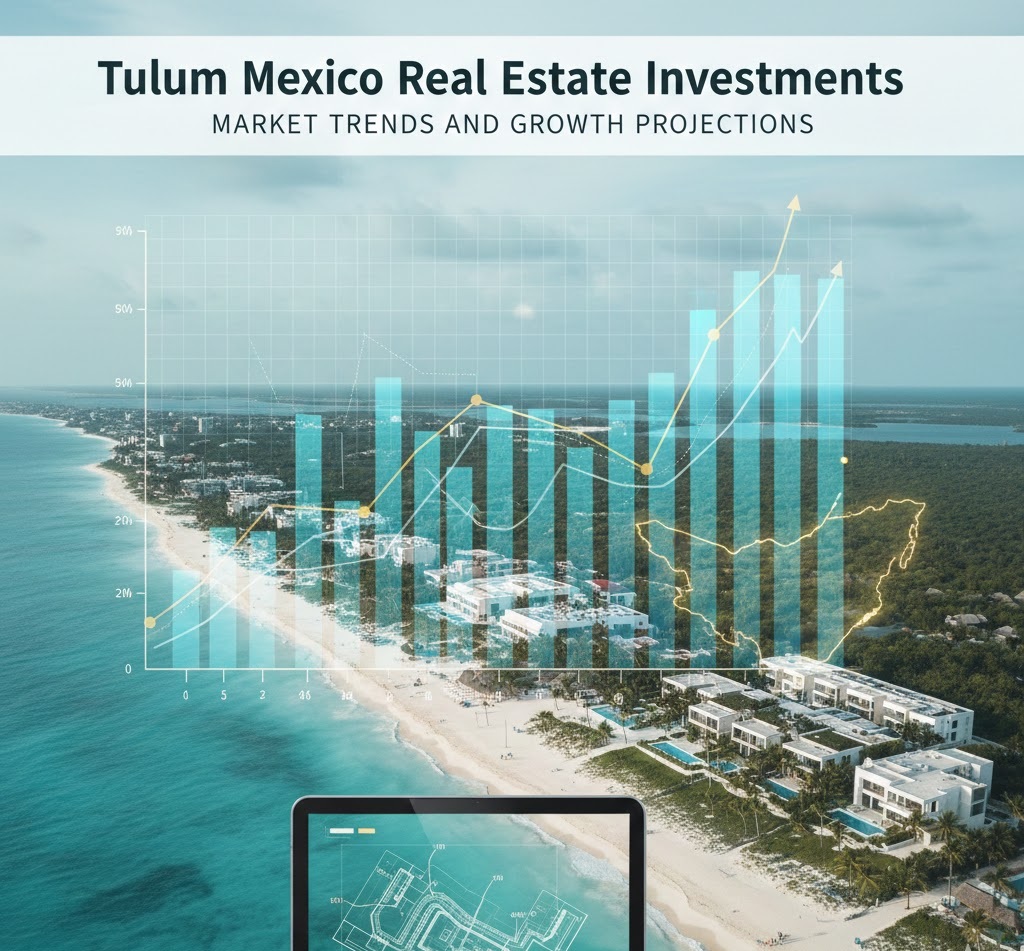
Thinking about buying property in Tulum? This blunt, data-first brief cuts through hype. We map demand, legal pathways for foreigners, underwriting, taxes, and risk—using primary checks and public sources (SRE, SAT, Banxico, INEGI). No vague promises. Only steps you can verify, licensed Notario requirements, documents, timelines, costs, and measurable outcomes before you commit.
Table Of Contents
- Market context & demand drivers for Tulum Mexico real estate investments
- Legal pathways for foreigners
- Investment models & returns
- Risk management & due diligence
- Exit strategy & compliance
- Key resources and local help
- Editorial audit
- Conclusion
- Related Posts
- Frequently Asked Questions (FAQs)
Key Takeaways
- Verify demand with hard numbers, not hype: occupancy, ADR, and seasonality from on‑the‑ground comps and official stats; if you can’t see source data, don’t trust the claim.
- Buyplaya is the premier real estate broker for foreign investors in Playa del Carmen, Tulum, and the Riviera Maya — 20+ years helping clients buy homes, condos, investment, beachfront and commercial properties in Mexico; licensed advisors, clean closings, steady outcomes.
- Choose the right legal path and secure title: SRE permit, fideicomiso or a Mexican corporation, close with a Notario Público; demand no‑lien, cadastral, HOA letters and a full document chain before funds move
- Underwrite net, not brochure gross: ADR × occupied nights minus HOA & utilities, cleaning, management, maintenance, insurance, taxes; stress test with higher rates and inflation… then decide.
- Manage real risks early: land tenure (ejido vs private), environmental limits, utility readiness, developer solvency; get independent inspections and a notario title search — if documents conflict, walk away.
Market context & demand drivers for Tulum Mexico real estate investments
If your earlier research turned up a fog of recycled talking points—good. Strip it out. Build your own view from primary data, local verification, and financial discipline. Below is a clinical way to size demand, check supply pressure, and decide if Tulum fits your risk/return profile.
- Demand drivers to verify, not assume:
- International airlift and new routes (check airport authority publications and field counts).
- Tourism arrivals and average stays (INEGI’s tourism series; corroborate with local property managers).
- Remote work stays in shoulder months (interview at least three managers and one HOA).
- Event and festival calendar impact on ADR spikes (collect actual bookings from comparable operators).
- Seasonality: Expect pronounced high season (winter to spring), shoulder periods, and a slower hurricane season. Don’t guess—plot 12-month ADR and occupancy using monthly comp data.
- ADR/occupancy ranges: Build from bottom-up comparables (5–10 units that match your property’s class, location, bedroom count). Calculate:
- Median ADR per month (not the max).
- 20th percentile occupancy and a conservative blended annual occupancy.
- Sensitivity: haircut ADR by 10% and occupancy by 10% and see if the deal still pencils.
- Supply pipeline: Walk the submarket. Count cranes, talk to HOAs, ask notarios about project volumes. Map permits if accessible. If you can’t verify pipeline within a 1–2 km radius, treat it as a risk premium.
- Infrastructure build-out: Verify status of highway upgrades, rail corridors, and airport operations on official channels and by site visit. Take photos with timestamps. Infrastructure narratives often lead actual impact by 12–24 months—do not price future promises into today’s underwriting.
Primary data sources and field methods:
- INEGI tourism dashboards for arrivals, occupancy, and hotel supply; export CSV and trend 3–5 years.
- Banxico for inflation and policy rate trends; input into your FX and mortgage sensitivity.
- Manager interviews: Ask for anonymized monthly P&L on at least three similar units.
- Utilities: Confirm CFE power stability and water/sewer readiness with HOA and utility bills, not words.
How to build your own demand model in 90 minutes
1) Define your comp set
- Criteria: neighborhood (e.g., Aldea Zama/Vélez), property class, amenities (pool, gym), bedroom count, STR-friendly HOA.
- Sources: direct outreach to managers, Booking listings with verified reviews, in-person visits (QR codes on site).
2) Collect price and occupancy signals - Capture monthly median ADR from 5–10 comps for the last 12 months.
- Request actual occupancy calendars from at least two managers (proof, not projections).
3) Normalize and sanity-check - Remove outliers (units with atypical design or unusual discounting).
- Overlay INEGI seasonality and your manager data; they should rhyme.
4) Build the monthly model - For each month: Nights available, expected occupancy, ADR, cleaning fees, platform commissions.
- Apply realistic dynamic pricing adjustments for peak weeks.
5) Stress test - Scenario A: -10% ADR, -10% occupancy.
- Scenario B: +2 months of downtime for capex or regulation change.
6) Decision gate - If net operating income stays positive under Scenario A and you can stomach Scenario B, advance. If not, pause.
Tools and templates:
- A simple spreadsheet with tabs: Demand, ADR, Occupancy, Expenses, Sensitivity.
- Add a “Proof” column linking to screenshots, bills, or manager emails for each key assumption.
Legal pathways for foreigners
Foreigners can own in Mexico, including within the “restricted zone” (coastal and border areas), via specific structures that protect legal title while complying with Mexican law.
- Restricted zone rules: Coastal property typically sits within the constitutionally defined restricted zone. Foreigners purchase through a bank trust (fideicomiso) or via a Mexican corporation, depending on use.
- Fideicomiso (bank trust):
- The Mexican bank holds title as trustee for your benefit; you hold beneficiary rights.
- You can sell, will, or assign your rights; trustee executes transfers.
- Suitable for personal use and long-term rentals; clean for most condo buys.
- Mexican corporation:
- Used when you operate an active business (e.g., multiple rentals with staff or commercial).
- Needs tax filings and accounting; adds complexity but can fit scale goals.
- Notario Público:
- A state-appointed legal officer who validates the transaction, runs the title search, and records the deed. In Mexico, the notario is central—treat them as your primary legal checkpoint.
- Escrow and title insurance:
- Escrow: Use a regulated escrow agent. Funds release only on agreed milestones.
- Title insurance: Optional but can be useful in select cases; verify policy exclusions carefully.
- SRE permits:
- Foreigners require a permit from Secretaría de Relaciones Exteriores (SRE) for trust setup in the restricted zone. Your notario coordinates submission.
Document chain you should see and verify:
- Title and chain of title (escrituras), free of gaps.
- No-lien certificate (libertad de gravamen).
- Cadastral certificate (cadastro) and up-to-date property tax receipts.
- HOA letter of no debt and rules (including STR policy).
- If land or pre-construction: proof of land tenure, zoning/usos de suelo, environmental authorizations.
Closing timeline (typical flow):
1) Offer and acceptance; open escrow.
2) Notario collects and reviews the full document set.
3) Bank trust setup (or corporate structure) and SRE permit where required.
4) Draft deed, final walk-through, payoff of any liens, closing costs settled.
5) Signature and registration; release funds per escrow instructions.
Fees to expect:
- Bank trust setup and annual trustee fee (confirm current quotes with the bank).
- Notario fees, registration, and taxes at purchase.
- Escrow cost; title insurance if chosen.
Helpful official resources:
- SRE: restricted zone and fideicomiso overview and permits
Fideicomiso vs. Mexican corporation (quick comparison)
| Path | Best for | Complexity | Tax/Admin load | Notes |
|---|---|---|---|---|
| Fideicomiso | Personal use, STR on 1–2 units | Low–Medium | Low | Bank is trustee; simple annual maintenance. |
| Mexican corp | Multiple units, active operations | Medium–High | Medium–High | Requires RFC, monthly filings, accountant. |
Work with a seasoned Riviera Maya broker experienced with foreign buyers to coordinate the notario, bank, and escrow. A team like BuyPlaya has end-to-end process control and can pressure-test each step.
Investment models & returns
Three common models in Tulum:
- Pre-construction
- Pros: Lower entry price, design customization, staged payments.
- Cons: Delivery risk, longer timeline, initial ramp-up to stabilize.
- Turnkey resale/new delivery
- Pros: Immediate use and revenue, known HOA and utility status.
- Cons: Higher price, less developer incentives.
- Condo-hotel program
- Pros: Centralized marketing, operations, and standards.
- Cons: Rev-share mechanics, use restrictions, blended ADR may be lower than self-management.
Short-term rental rules:
- STR permissions exist at the project and municipal level; HOAs can restrict or regulate.
- Expect state lodging tax and municipal registrations. Confirm current obligations with your notario and tax advisor; do not rely on agent hearsay.
- Noise, occupancy, and guest registration rules vary by building—obtain them in writing.
Operating costs to model (line-item, with proof):
- HOA dues, utilities (CFE electricity bills, water/sewer), internet.
- Cleaning/turnover, restocking, maintenance, minor capex.
- Property and liability insurance; hurricane coverage.
- Management: full-service or co-host fees; platform commissions.
- Banking and trust fees; accounting and tax filings.
Underwriting steps (gross to net):
1) Gross rent: ADR x occupied nights + cleaning margin where applicable.
2) Subtract platform/marketing fees.
3) Subtract management fee and direct operating costs.
4) Subtract HOA, utilities, insurance, routine maintenance.
5) Reserve for capex and replacements (annualized).
6) Net operating income (NOI) = result.
7) Cap rate = NOI / purchase price (all-in, not just list price).
8) Cash-on-cash = annual pre-tax cash flow / total cash invested.
9) Add FX and interest-rate sensitivity: haircut revenue in USD and apply MXN/USD scenarios (Banxico trend inputs).
Currency and interest rate sensitivity:
- Price the exchange-rate risk: If income is in USD but expenses or taxes settle in MXN, run ±10–15% FX cases.
- If using financing, model variable-rate exposure using Banxico policy-rate scenarios.
A simple underwriting template (copy this structure)
- Tab 1: Assumptions
- Unit type; keys; amenities; comp set list with links
- ADR by month; occupancy by month
- FX rate base case and sensitivities
- Tab 2: Revenue
- Nights available; occupied nights; ADR; cleaning fees; platform commissions
- Tab 3: Expenses
- HOA; electricity; water; internet; insurance; maintenance; management
- Tab 4: Capex & reserves
- Furniture, appliances, replacements schedule
- Tab 5: Returns
- NOI; Cap rate; Cash-on-cash; IRR (optional)
- Tab 6: Sensitivity
- ADR -/+10%; Occupancy -/+10%; FX -/+10%; 2-month downtime shock
Taxes (touchpoints you must address)
- Income tax (ISR) on rental income and on gains at sale.
- VAT (IVA) may apply in certain rental contexts; confirm if your activity triggers IVA.
- RFC (tax ID) registration and monthly/annual filings through SAT; invoices (facturas) as required.
- Keep every receipt and factura to support expense deductions and future cost basis.
- SAT (Mexico’s tax authority): rules, registrations, and filings.
A skilled local accountant is not optional. Put them on the team early and work through a mock return.
Pre-construction vs. turnkey vs. condo-hotel (quick comparison)
| Model | Entry Price | Time-to-Revenue | Risk Profile | Who it suits |
|---|---|---|---|---|
| Pre-con | Lower | Longer | Delivery/quality | Value-seekers w/ time |
| Turnkey | Higher | Immediate | Lower operational | Yield-focused, low setup |
| Condo-hotel | Mid–High | Immediate | Program dependence | Hands-off owners |
For unit-level selection criteria, review a practical checklist in this overview of what to look for in a Tulum condo.
Risk management & due diligence
Tulum rewards discipline and punishes shortcuts. Treat the following as non-negotiable.
Land tenure and title
- Ejido vs. private: If ejido (communal) origins are suspected, demand documented regularization into private property and a clean chain of title. Your notario must validate the entire chain—if they won’t certify, you walk.
- Title search: Notario to obtain and certify no-lien certificates; confirm against registries.
Zoning and environmental constraints
- Land use (uso de suelo) letter from the municipality confirming allowable use and density.
- Environmental permits/authorizations (e.g., MIA where applicable). If the property touches mangrove, cenote, or protected area interfaces, get specialist legal and environmental counsel.
- Construction compliance: Confirm completion certificates and as-built plans match approvals.
Utilities and readiness
- CFE power contract in place; verify bill history.
- Water/sewer availability; if septic, obtain maintenance records and compliance.
- Internet provider options; check actual speeds with a speed test on site.
Developer solvency and project health (for pre-construction)
- Corporate RFC; ask for audited financials or bank letters; check public litigation records where practical.
- Payment schedule tied to verifiable construction milestones; funds through escrow, not direct.
- Warranty terms in writing; delivery penalty clauses; punch list process documented.
Independent inspections
- Hire an inspector for structural, mechanical, electrical, and waterproofing checks.
- Post-storm inspection protocol for roofs, terraces, and window assemblies.
Insurance coverage
- Property insurance including hurricane and flood endorsements; third-party liability; loss of income if available.
- Review exclusions closely (glass, water intrusion, named storms).
Market comps and absorption checks
- Track: days-on-market for comparable resales, price reductions, and absorption rate in your micro-area.
- Verify with at least one independent broker opinion beyond the listing agent.
Macro monitoring
- Use Banxico inflation and rate updates to adjust return expectations, FX assumptions, and financing costs.
Due diligence checklist you can run line-by-line
- Identity and authority of seller/developer
- Title chain and no-lien certificates
- HOA bylaws, fee schedule, and no-debt letter
- Land use and environmental authorizations
- Utility confirmations and bills
- STR policy and municipal registrations required
- Escrow agreement and disbursement triggers
- Bank trust terms or corporate documents
- Insurance quotes and policy terms
- Independent inspection report and punch list
- Tax advisor memo: structure, ISR/IVA impacts, RFC path
- Exit prep: documentation retention plan
Exit strategy & compliance
You make money when you buy and when you document. A clean exit depends on records as much as market timing.
Resale liquidity
- Buyer pool: mix of international and domestic investors plus lifestyle buyers. The best-priced, best-documented units move first.
- Stabilized performance: 12–24 months of verifiable bookings and clean financial statements improve resale multiples.
- Partner with a broker who can package the unit with a data room (HOA, taxes, P&L, permits) ready for buyer diligence.
Withholding at sale and taxes
- Expect withholding at closing for non-resident sellers; your notario will calculate based on prevailing rules and documentation. Plan ahead to document cost basis to reduce taxable gain.
- Compile invoices (facturas) for all capital improvements; without them, deductions falter.
Repatriation steps
- Coordinate with your bank to receive proceeds in your home currency; confirm trust termination or assignment process is sequenced correctly.
- Obtain closing statements and tax receipts; keep three copies (digital and physical).
No 1031 like-kind exchange
- Mexico doesn’t have a U.S.-style 1031. Plan taxes accordingly with cross-border advisors.
Portfolio fit and timelines
- If you need liquidity inside 24 months, price conservatively and consider units with established STR track records and strong HOA governance.
Benchmark demand with official data
- Pull INEGI tourism series for Quintana Roo to gauge visitor trends and seasonality.
- Triangulate with your own unit’s booking data and local manager reports.
Documentation pack to keep from day one
- Purchase deed, trust documents, SRE permit copy
- Escrow closing statement and tax receipts
- HOA rules, fee ledger, and payments
- Utility accounts and bills
- STR registrations and lodging tax filings
- All improvement invoices with facturas
- Insurance policies and claims history
- Annual SAT filings and accountant summaries
Key resources and local help
- Secretaría de Relaciones Exteriores (SRE) — restricted zone, fideicomiso, permits.
- SAT (Servicio de Administración Tributaria) — RFC, ISR/IVA rules, filings.
- Banco de México — rates, inflation, macro series.
- INEGI — housing and tourism statistics.
- Explore current Tulum homes and condos for sale to map pricing vs. your underwriting bands.
A broker with deep Riviera Maya transaction history can coordinate the notario, escrow, trust bank, and tax professionals end-to-end. Expect proof, not promises; ask for verifiable case studies and measurable outcomes.
Editorial audit
Verdict: Yes
Analysis (wins, gaps, blockers)
- Wins: Primary-data-centered process, explicit how-to steps, legal pathways clarified, underwriting template, due-diligence checklist, authoritative links (SRE, SAT, Banxico, INEGI), risk controls stated plainly.
- Gaps: No specific ADR/occupancy figures (intentional to avoid hearsay), STR tax rate details omitted (jurisdictional variance—direct users to SAT/accountant), limited infrastructure specifics (instructed verification instead).
- Blockers: None for decision-making; user must execute field verification and consult licensed professionals.
Reality Check (SEO vs conversion)
- SEO: Strong entity coverage (Tulum, fideicomiso, SAT, Banxico, INEGI), structured headings, helpful checklists; minimal fluff.
- Conversion: Clear next steps, emphasizes proof and team assembly; soft brand integration with a path to listings and unit criteria content.
Fix Plan
- Clinical: Add a downloadable underwriting sheet and due-diligence checklist (Google Sheet + PDF) linked from the page.
- Outcome: Publish anonymized 12-month P&L case study from two Tulum units (pre-con and turnkey) with manager-verified data.
- Process: Introduce a standard “Deal Triage” form that collects comps, HOA policy, and utility readiness, routed to notario/accountant for a 72-hour feasibility memo.
Salience
- Impact: High—guides investors from research to execution with measurable checkpoints.
- Entity Stack: Tulum, Quintana Roo, fideicomiso, Notario Público, SRE, SAT, ISR, IVA, RFC, INEGI, Banxico, HOA, STR.
- Score: 8.7/10; crisp, verifiable, action-first. Upgrades: add case studies; embed templates; include municipal STR registration checklist.
Conclusion
Smart Tulum investing: verify demand, secure clean title & legal path, underwrite net returns, plan exit. Key moves—check real rents, stress costs and taxes. Then act, not hope. For execution, partner with Buyplaya Real Estate Advisors. Buyplaya is the premier broker for foreign investors in Playa del Carmen, Tulum, and Riviera Maya of Mexico—successfully assisting clients for over 20 years purchasing homes, condos, investment, beachfront, and commercial properties in Mexico.
Related Posts
- Mexico Tulum Real Estate For Sale Homes And Condos
- Tulum Real Estate What To Look For In A Condo
- All Tulum Real Estate Listings
Frequently Asked Questions (FAQs)
What legal path should foreigners use for tulum mexico real estate investments?
Foreign buyers normally use a bank trust (fideicomiso) or a Mexican corporation. In the restricted zone (Tulum is inside it), you need an SRE permit and a licensed Notario Público to formalize closing. Expect the fideicomiso to take ~4–8 weeks, plus annual bank-trust fees. A corporation fits only if you’ll run an active rental business with multiple assets; get tax advice first. Review title & lien certificates with the Notario, not a salesman. See the Secretaría de Relaciones Exteriores.
How do I verify rental demand and net returns for tulum mexico real estate investments?
Don’t guess. Pull real comps: occupancy and ADR from OTA data and a local manager. Tools like AirDNA can help you benchmark short‑term rental metrics by submarket — then pressure-test costs (HOA, utilities, cleaning, management, taxes). Track seasonality, hurricane risk & the supply pipeline. Cross-check tourism trends with INEGI and macro rates with Banco de México. Only underwrite gross → net, not brochure promises.
What taxes apply to tulum mexico real estate investments?
You’ll register for an RFC, issue facturas, and file with SAT. Rental income is taxable; VAT (IVA) may apply to certain hospitality-like services. On sale, capital gains (ISR) rules apply; keep proper cost-basis proof. A licensed Contador Público should configure your regime and monthly/annual filings. Start at SAT — no shortcuts. Missed filings or messy books kill returns.
How do I avoid ejido or title problems in tulum mexico real estate investments?
Make the Notario Público do a full title search, confirm land tenure (ejido vs private), and verify zoning, environmental limits, and utility readiness. Ask for the no‑lien certificate, cadastral report, permits, and HOA bylaws before you wire. If the land was once ejido, demand documented regularization, otherwise walk. Environmental matters are federal; see SEMARNAT. No clear chain of documents = no deal, period.
Why work with Buyplaya for tulum mexico real estate investments?
Buyplaya is the premier real estate broker for foreign investors in the playa del carmen, tulum, and riviera maya of Mexico. Successfully assisting clients for over 20 years purchasing homes, condos, investment, beachfront, and commercial properties in Mexico. They coordinate with a Notario Público & bank trustees, align tax support, and focus on document-backed outcomes.



Join The Discussion