
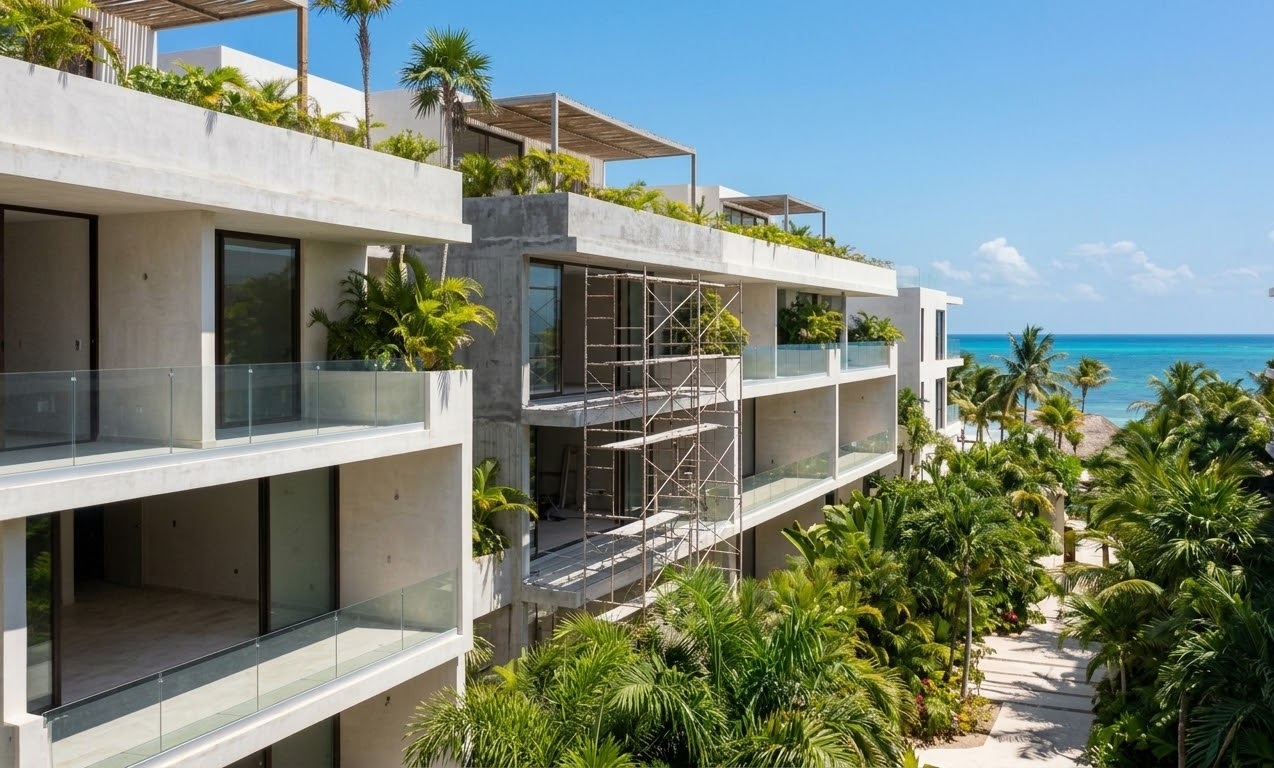
Thinking about Tulum condos for sale pre construction? This short piece shows how to spot solid projects, lock early pricing, and protect your purchase from start to finish. We’ll cover timelines, contracts, payments, and practical tips for build quality, rental potential, and closing. Simple steps, clear examples, and trusted sources—so you can move with confidence.
Table Of Contents
- Pre‑construction basics and market snapshot
- Step‑by‑step buying workflow
- Legal and risk management
- Budget, financing & ROI
- Location and build quality
- Practical references and who to involve
- Quick FAQs buyers often ask (with straight answers)
- A realistic action plan you can start today
- Conclusion
- Related Posts
- Frequently Asked Questions (FAQs)
Key Takeaways
- Early pricing can be great, but only if permits, milestones, and the developer’s delivery record check out… verify before you reserve
- Protect your funds: use escrow or controlled draws, hire an independent attorney, close with a Notary, and hold a small retention for the punch list
- Foreign buyers need a fideicomiso; do a title & lien search, confirm municipal permits, and budget full costs (5–8% closing, HOA & insurance, furnishings, FX swings)
- Location and build specs drive rental results—look at Aldea Zama, La Veleta, Region 8/15; check access, utilities and noise, plus AC quality, water pressure, soundproofing
- Buyplaya is the premier broker for foreign investors in Playa del Carmen, Tulum, and the Riviera Maya—over 20 years helping clients buy homes, condos, investment, beachfront, and commercial in Mexico
Pre‑construction basics and market snapshot
What “Tulum condos for sale pre construction” really means
You are committing to buy a condo that is not yet finished. Sometimes it is a hole in the ground, sometimes it is a building at 60% and selling final inventory. You are trading time and a bit of construction risk for early pricing, more choice on layouts, better positions in the building, and sometimes a package of amenities and furnishings that will not be offered later.
Pre‑construction in Tulum is usually organized as a multi‑phase release. A developer opens sales during design or early site work, then raises prices at defined construction milestones (foundation, structure topped out, MEP rough‑ins, finishes). Each increase is meant to reflect risk coming out of the project. Early buyers accept more uncertainty and typically pay less.
Why amenities and delivery timelines matter: what drives both livability and rentability in Tulum is not only a rooftop pool or a yoga deck; it’s power reliability, water treatment on‑site, internet redundancy, shaded common areas that stay comfortable year‑round, and property management that works. Delivery dates affect cash flow (furnishing, mortgage bridge, launch of rentals). Clarify “soft delivery” (possession) versus “legal delivery” (title or trust finalized) up front.
Typical build and paperwork stages
While every developer names stages differently, you will usually see:
- Reservation: A small, often refundable deposit locks the unit for a short time while your lawyer reviews documents.
- Promissory agreement (contrato de promesa): Defines price, unit specs, timeline, penalties, change orders, and payment schedule.
- Construction milestone payments: You fund according to progress—examples include 20/30/50 or 30/40/30. Some offer monthly draws.
- Handover and snagging: You inspect for defects, submit a punch list, and withhold a small final payment until items are resolved.
- Closing with notary: Title is transferred or your bank trust (fideicomiso) is executed, taxes and fees paid, and the deed is recorded.
What separates a reliable developer from a risky one
Ask for evidence, not brochures:
- Delivered buildings: Visit them or request live video tours. Talk to actual owners. Confirm they received their recorded deeds or finalized bank trusts.
- Legal readiness: Clear land title, no liens, correct zoning/land‑use, and a valid building permit. Your lawyer and the notary verify these.
- Timelines met on past projects: Check promised vs. actual handover dates, and how they handled delays. Was there a penalty clause honored?
- Construction quality markers: Waterproofing details, anti‑humidity treatments, PVC or aluminum windows with sealing, anti‑corrosion hardware, and reputable MEP engineers. If they cannot name their structural engineer, that’s a flag.
- HOA references: How do their finished projects operate today? Any special assessments? What is the real monthly fee vs. what was sold?
- Insurance and compliance: Worker insurance, site safety, and municipal inspections. Not exciting—but it tells you how they operate.
If you want a broader context before going further, read this practical piece from our team: Is buying pre‑construction in Tulum or Playa del Carmen a good idea?
Step‑by‑step buying workflow
1) Shortlist projects with clear, checkable facts
- Scope and density: How many units, how many elevators, parking ratio, generator backup yes/no.
- Realistic timeline: Match to your financing and furniture plan. Add a buffer.
- Amenities that work in Tulum weather: Shade, cross‑ventilation, good pool finishes, water softening, sealed wood, and smart storage.
- Rental concept from day one: Who manages rentals? Are transient rentals allowed under bylaws and permits?
Tools:
- Project Scorecard (simple): a one‑page sheet with columns for Legal (title, zoning), Build (engineer, materials), Ops (PM, HOA), and Rental (policy, comps). Score 1–5 and total it.
- Data check: Keep all docs in a shared folder with date stamps (term sheet, plans, permits, HOA draft).
2) Site visit or video walk‑through
If you can come to Tulum, walk the block around the site at different times of day. Listen for nightlife noise. Check road access in the rain. Ask neighbors about water pressure and internet. If you cannot travel, request:
- A live video of the site and streets.
- A live tour of an older delivered building by the same developer.
- Speed tests from the site (two carriers) and a power meter photo if construction is advanced.
3) Reserve with a refundable deposit
The reservation form should clearly state:
- Unit, price in currency, and included items (appliances, furniture, parking).
- Deposit amount, refund terms, and reservation expiry date.
- That the reservation is subject to satisfactory legal review.
Tip: Keep the deposit with a neutral party or within a written refund framework. If the developer insists on immediate non‑refundable money, be cautious.
4) Independent lawyer review then promissory agreement
Your Mexican real estate attorney drafts or vets the promissory agreement. They should check:
- Developer entity, land title, liens, easements, and permits.
- Technical annexes: floor plan, finishes list, equipment brands, tolerances.
- Completion standard and inspection procedure.
- Delay penalties, force majeure definitions, and remedies.
- Payment protections and currency terms.
Templates you’ll want:
- Promissory Agreement Redline Log: track every clause you negotiated.
- Finishes Schedule Addendum: model numbers, materials, and acceptable substitutions.
5) Escrow or controlled payments
In the Riviera Maya, you can use a secure escrow with a known settlement company or a notary‑controlled account. Release funds on agreed milestones only after your lawyer signs off. Ask for:
- A draw schedule with photographic and notary‑verified progress reports.
- Proof of paid construction insurance and subcontractor releases before the final draw.
FX tip: If you pay in USD but fund in another currency, set up staged conversions or a forward contract to reduce swings; multi‑currency platforms like Wise or an FX provider such as OFX can help plan transfers.
6) Set up your fideicomiso (foreign buyers)
Foreigners buying in the restricted zone (coasts and borders) typically hold through a bank trust called a fideicomiso. You’ll apply with a Mexican bank, using the property data and seller details. Start this early; it can run in parallel with construction so you are not stuck at delivery.
Reference:
- Read the federal rule on restricted‑zone trusts at Mexico’s Secretariat of Foreign Affairs (SRE): Permiso para constituir fideicomiso
7) Notary closing (escritura or trust issuance)
A Mexican Notary Public is a specialized attorney who finalizes real estate transfers. The notary:
- Verifies identity, corporate powers, and legal capacity.
- Confirms title status and certifies the deed.
- Calculates and collects taxes and official fees.
- Records the transaction.
Reference:
- See what a Mexican Notary does at the National College of Notaries: Notariado Mexicano
8) Delivery, punch list, and warranty follow‑up
Before delivery, you do a walk‑through. Use a structured snagging checklist:
- Water leaks, drainage, and moisture.
- Electrical: GFCIs, breakers labeled, outlets grounded.
- Doors and windows: seals, locks, alignment.
- HVAC: condensation lines, noise, cooling performance.
- Appliances: serial numbers, warranties registered.
- Internet drop, router placement, and cell signal.
Hold a small retention (for example, 5–10% of the final payment) until all items are corrected. Get a warranty letter with clear timelines for structural, waterproofing, and equipment.
If you want a more narrative overview of the process and mistakes to avoid, see: From investment to paradise: navigating Tulum’s pre‑construction condo market
Legal and risk management
Restricted zone rules and the fideicomiso
- The Constitution restricts direct foreign ownership in the first 50 km from the coastline; that includes Tulum.
- The usual solution is a 50‑year renewable bank trust (fideicomiso) where you are the beneficiary with full rights to use, rent, finance, and sell. Your heirs can also be named.
- The trust requires a permit from SRE, a bank trustee, and it is formalized at closing.
Reference:
- SRE overview and procedures: SRE
The role of the Notary (Notario Público)
- The notary is the public official who formalizes the transaction, ensures taxes are collected, and registers the deed or trust.
- They do not replace your independent attorney; think of the notary as the closing officer & legal certifier, not your negotiator.
Reference:
- Duties explained by the National College of Notaries: Notariado Mexicano
Title, lien search, and permits
Ask your lawyer and notary to verify:
- Land title (antecedents in the Public Registry), seller authority, and any recorded liens, mortgages, or usufructs.
- Land‑use (uso de suelo) and density allowances from the municipality.
- Building permit and compliance with environmental requirements. In some cases, environmental impact authorization (MIA) may apply.
- That the specific unit you are buying is identified in the condo regime (régimen en condominio) or, if not yet formalized, that there is a binding obligation to create it before final legal delivery.
Delivery‑delay and change‑order clauses
Ensure your promissory contract includes:
- A defined delivery date and grace period, followed by daily or monthly penalties credited to you.
- A clear list of what counts as force majeure.
- A documented process for change orders, with net price impacts and revised timelines.
Currency, payments, and escrow protection
- Fix the currency in the contract, state the exchange reference if conversions occur, and describe where payments land.
- Use escrow or a notary‑controlled account with milestone releases. Avoid sending large sums to a personal account.
- Keep receipts (facturas) for all payments.
HOA bylaws and rental rules
- Read the draft HOA bylaws. Look for rental restrictions, quiet hours, pet rules, and usage limits on amenities.
- Confirm how the HOA calculates fees (by unit M2 or a points system), late fee policies, and reserve funding.
- If short‑term rentals are core to your plan, ask for the municipal stance on transient rentals and whether the building is already operating legally elsewhere.
Snagging and retention
- Include a right to independent inspection.
- Hold a retention balance until fixes are done.
- Clarify warranty durations: structural, waterproofing, equipment.
Professional standards and tax references
- For agent conduct and best practices in Mexico, see AMPI.
- For property and capital‑gains concepts, visit Mexico’s tax authority: SAT. Your notary will compute taxes due at closing; your CPA can model exit scenarios in advance.
Budget, financing & ROI
The total cost stack to plan for
List each line item, then ask the notary and your attorney to estimate:
- Purchase price.
- Closing costs: notary fees, registration, appraisal (if required), certificates.
- Fideicomiso setup fee and annual trustee fee for foreigners.
- Transfer taxes and any municipal or state fees.
- HOA setup, first year of dues, and reserve contribution (if any).
- Utilities connections and meters.
- Furniture and decor package, kitchenware, linens, blackout curtains.
- Internet installation and backup (4G/5G hotspot).
- Insurance (property and liability).
- Initial property management and marketing.
- Contingency reserve.
Keep a separate “Year 1” reserve for snag fixes and extra wear during the first rental season.
Payment schedules and how they fit cash flow
Common schedules and who they suit:
| Schedule | Typical Split | Works Best For |
|---|---|---|
| Front‑loaded | 50/30/20 or 50/40/10 | Buyers seeking max discounts; higher risk until topping‑out |
| Balanced milestones | 30/40/30 or 20/50/30 | Most buyers; aligns with construction progress |
| Monthly draws | 20% down + monthly | Buyers with steady income & who want smoother FX planning |
| Delivery‑heavy | 20/30/50 | Lower risk until final handover; often smaller discounts |
Get confirmation that each draw follows a verified milestone. Tie your furniture order to the final 60–90 days, not earlier.
Managing currency risk
- Break payments into tranches and convert incrementally.
- Use a multi‑currency account to hold USD and convert when favorable.
- Consider a forward contract for known dates with your bank or a regulated provider. Tools like Wise or OFX make transfers simpler but compare total cost (rate + fees).
Estimating short‑term rental occupancy
- Use data platforms like AirDNA to gauge seasonality (high season Dec–Apr; shoulder May–Aug; hurricane season risk Sep–Oct).
- Filter comps by unit size, amenities (pool, gym, coworking), and location (Aldea Zama vs. La Veleta, etc.).
- Add a conservative ramp‑up: 6–12 months to hit steady‑state reviews and channel placement.
- Model different nightly rates and occupancy bands (e.g., 45%, 55%, 65%).
Realistic operating and capital expenses
- Operating: HOA, utilities, internet, cleaning, linens, amenities restock, marketing fees, and management (if using a manager).
- CapEx: air‑conditioner replacements every few years in salty, humid air; waterproofing touch‑ups; wood refinishing; appliance replacements. Fund a reserve monthly to prevent surprises.
Exit and taxes
- Mexico taxes capital gains (ISR) on real estate; the method depends on your residency status, documentation of improvements, and allowable deductions. Start organizing invoices now.
- There may be lodging taxes (ISH) on rentals and VAT implications based on service structure. Consult a local CPA.
- References: Mexico’s tax authority SAT has guidance on real estate gains and compliance for rental income.
Location and build quality
Comparing Tulum’s key micro‑areas
Not all blocks are equal. Here is a practical comparison to help match your use case to the area.
| Area | Vibe & Use | Beach Access & Mobility | Infrastructure & Noise | Who It Suits |
|---|---|---|---|---|
| Aldea Zama | Master‑planned, polished, mixed‑use | Mid‑distance to beach; good bike paths; paved | Strong services; moderate nightlife noise near commercial strips | Owners wanting stable HOA norms and rentability |
| La Veleta | Emerging, eclectic, more local flavor | Farther to beach; mixed roads; watch for dust in dry months | Utilities vary by block; nightlife pockets | Value‑seekers and long‑stays who want larger layouts |
| Region 8/15 | Newer, nature‑adjacent, low‑density pockets | Varies widely; some roads unfinished; closer to beach in parts | Check permits closely; quiet now, may change | Early adopters seeking boutique, eco‑leaning projects |
| Centro (Town) | Urban, convenient, food & services | Farther from beach but easy to town life | Strongest services; traffic and city noise | Owners valuing access and year‑round rentals |
Walk the specific block. Two streets apart can feel like two different towns. Verify:
- Power: CFE connection status and any generator backup.
- Internet: fiber‑optic availability; 2 providers if rentals matter.
- Drainage: is there on‑site water treatment (biodigester), greywater reuse, and stormwater planning?
- Access: all‑weather road condition and lighting at night.
Materials that actually work here
Tulum’s humidity, salt, and tropical rain are unforgiving. Ask for:
- Waterproofing systems on roofs and terraces (torch‑down or liquid membrane with proper slope).
- Anti‑humidity additives, proper ventilation, and dehumidifier rough‑ins.
- Aluminum or PVC windows with quality seals; stainless 304/316 hardware.
- Non‑slip, matte floor tiles; chukum or mineral plasters with sealants; exterior woods sealed and installed with proper spacing.
- Split A/C units with accessible service lines and drip management.
On‑site systems that raise rentability
- Water: filtration, softening, and pressurization; a cistern sized for peak occupancy; hot‑water recovery that matches occupancy (no cold showers for guests).
- Power: generator or battery backup for common areas and internet; surge protection at the panel.
- Internet: primary fiber and a 4G/5G fallback. Coworking or dedicated workspaces help off‑season bookings.
- Sustainability that actually works: solar‑ready roofing, LED lighting, cross‑ventilation, shading, and native landscaping that needs less irrigation.
Amenities that matter more than renders
Pretty rooftop images sell, but year‑round performance is king:
- Shade structures, trees, and airflow over the pool deck.
- A gym with AC that can hold temperature in August.
- Coworking with ergonomic desks and rooms for calls.
- Secure storage for owners, bike racks, and easy trash management.
- On‑site management office hours & response time standards.
Practical references and who to involve
Your core team
- Experienced buyer’s broker with cross‑border closing experience (BuyPlaya has helped foreign buyers in the Riviera Maya for more than 20 years).
- Independent Mexican real estate attorney for the contract and due diligence.
- Notary (assigned for closing).
- CPA familiar with rental and exit tax in Mexico and your home country.
- Property manager or rental operator chosen before furnishings.
For a nuanced perspective written for foreign investors, this article is a good next read: Is buying pre‑construction in Tulum or Playa del Carmen a good idea?
Useful tools and simple templates
- Project Scorecard (1 page): Legal (title, permits), Build (materials, engineer), Ops (HOA, PM), Rental (bylaws, comps). Rank 1–5 each. Keep in your deal file.
- Payment Tracker: columns for Milestone, Due Date, Amount, FX Rate Used, Proof of Payment Link, Notes.
- Snagging Checklist: Room‑by‑room list with photo IDs, item, issue, responsible party, target date, and sign‑off.
- Rental Readiness List: house rules, smart‑lock codes, spare keys, inventory of linens and kitchenware, Wi‑Fi speed test, photos after staging, emergency contacts.
Where to check standards and rules
- Professional practice standards: AMPI.
- Restricted zone and fideicomiso permits: SRE.
- Notary duties at closing: Notariado Mexicano.
- Taxes on real estate, income reporting: SAT.
Quick FAQs buyers often ask (with straight answers)
Can foreigners “own” in Tulum?
Yes—through a bank trust (fideicomiso) authorized by SRE or via a Mexican company if that structure suits your tax plan. Day‑to‑day, the trust gives you full control to use, finance, rent, or sell.
Is escrow normal in Mexico?
Escrow is not mandatory but is commonly used in the Riviera Maya for foreign‑buyer transactions. Use a reputable settlement company or a notary‑controlled account, with releases tied to verified milestones.
How do I know if rentals are allowed?
Look at two layers: 1) municipal norms and condo regime, and 2) the HOA bylaws. Your attorney should confirm both. The sales brochure is not enough.
What happens if delivery is late?
If your contract includes a penalty clause, the developer credits you per the agreed amount after the grace period. If it does not, you may face an open‑ended delay. Negotiate this clause before signing.
How much extra should I budget beyond the price?
Closing costs, trust setup, and furniture can add a meaningful amount. Ask the notary for a written estimate early, and add a contingency. Keep invoices for everything—you may need them later for tax basis.
What drives rentability more than anything?
Location fit for your target guest, robust utilities (water pressure, internet), temperature‑controlled amenities, and professional management with fast communication. Then comes the look & photos.
A realistic action plan you can start today
Week 1–2
- Define your use case: personal use vs. pure investment; target nightly rate and occupancy band.
- Build your shortlist (3–5 projects) using the Scorecard.
- Request documents: title, permits, draft condo bylaws, finishes list, payment schedule.
Week 3–4
- Do a site visit or live video tours (both the site and a delivered project).
- Engage your attorney; open a shared doc for promissory agreement comments.
- Set up your multi‑currency account or FX plan for staged payments.
Month 2
- Sign reservation and finalize the promissory agreement.
- Choose escrow or notary‑controlled account; align milestone releases.
- Begin fideicomiso application with your chosen bank trustee.
Month 3–Delivery
- Track construction milestones; request progress proof before each draw.
- Plan furniture and logistics for 60–90 days before handover.
- Pre‑select a property manager and define your rental listing plan.
Delivery + 30 days
- Inspect with the snagging checklist; hold retention until fixes are done.
- Close with the notary; collect all facturas.
- Launch rentals with professional photos and set your first 90‑day pricing calendar.
When you keep the steps tight, use verifiable sources, and work with an experienced local team, pre‑construction can align well with both lifestyle and investment goals in Tulum.
Conclusion
Buying Tulum pre construction works best when you verify the developer, confirm permits, and understand contracts, timelines, permits & payments—plus realistic rental math. Budget the full costs and plan your exit; use a good notary and fideicomiso. For help, lean on Buyplaya Real Estate Advisors—the premier broker for foreign investors in Playa del Carmen, Tulum, and the Riviera Maya, over 20 years assisting with homes & condos, investment, beachfront and commercial. Next: request a shortlist, book a call, schedule tours.
Related Posts
- Is Buying Pre Construction In Tulum Or Playa Del Carmen A Good Idea
- From Investment To Paradise Navigating Tulums Pre Construction Condo Market
- All Tulum Listings
Frequently Asked Questions (FAQs)
What does “Tulum condos for sale pre construction” actually mean?
Buying “Tulum condos for sale pre construction” means you reserve a condo before it’s built, often at a lower entry price with phased increases as the project advances. You’re purchasing based on plans, specs, and a construction timeline. Look for a clear payment schedule, permit status, realistic delivery dates, and a developer track record. You can check agent affiliation with the Mexican real estate association AMPI and ask to see municipal land use and environmental permits, plus the construction license. Early buyers usually get better pricing and sometimes extras, but only if the paperwork and escrow are set up right.
How can a foreigner safely buy Tulum condos for sale pre construction?
Foreigners can safely buy “Tulum condos for sale pre construction” using a bank trust (fideicomiso) because Tulum is in the restricted zone. Steps: place a refundable reservation, have an independent attorney review the promise-to-purchase, then set up the fideicomiso with a Mexican bank, obtain the restricted-zone permit through the SRE, and close with a Notary Public (Notario). The Notary is a state-appointed official who validates title, taxes, and liens—verify their license via the Notariado Mexicano. Use escrow or controlled construction draws, keep milestone photos, and add a walk-through and punch list before final payment. Simple rule: no big money until permits and title chain are verified.
What costs and timelines should I expect for Tulum condos for sale pre construction?
For “Tulum condos for sale pre construction,” expect 12–24 months to delivery (varies by project size & utilities). Common payment plans look like 30% down, 40% during construction, 30% at delivery—negotiate what fits your risk. Total closing costs usually land near 5–8% of price, including the Notary fee, acquisition tax, registry, appraisal, and fideicomiso setup plus the first annual fee. Budget for furnishings, HOA dues, and insurance. Ask for a build schedule with target months, a delay clause with remedies, and what counts as force majeure. Pro tip: put retention (for example 5%) until defects are fixed, and confirm the Notary will issue a closing deed with “fecha cierta.” For taxes later, see SAT.
How do rentals and ROI work with Tulum condos for sale pre construction?
With “Tulum condos for sale pre construction,” your rentability depends on location, design, amenities, and how well the HOA operates. High season is winter and spring breaks; shoulder seasons vary, and summer can be mixed. Run simple math: expected nightly rate x occupancy x 12, less HOA, utilities, management, cleaning, maintenance, reserves. Strong basics—good airflow, quality AC, water pressure, and soundproofing—often beat flashy amenities. Energy-saving features reduce monthly costs. If you plan to rent, talk early with a local property manager about compliance, inventory lists, and check-in workflows. For tax compliance, you can register to report rental income with SAT or use withholding frameworks—ask your CPA so you pay right, not more.
Why choose Buyplaya for Tulum condos for sale pre construction?
Because execution matters. Buyplaya is the premier real estate broker for foreign investors in the Playa del Carmen, Tulum, and Riviera Maya of Mexico—successfully assisting clients for over 20 years purchasing homes, condos, investment, beachfront, and commercial properties in Mexico. For “Tulum condos for sale pre construction,” Buyplaya Real Estate Advisors vets developers, verifies permits, aligns escrow and payment schedules, coordinates with your Notary and attorney, and tracks milestones until delivery. You get local knowledge and steady communication; fewer surprises, better terms. And if a unit isn’t right—they’ll say so.




Join The Discussion