
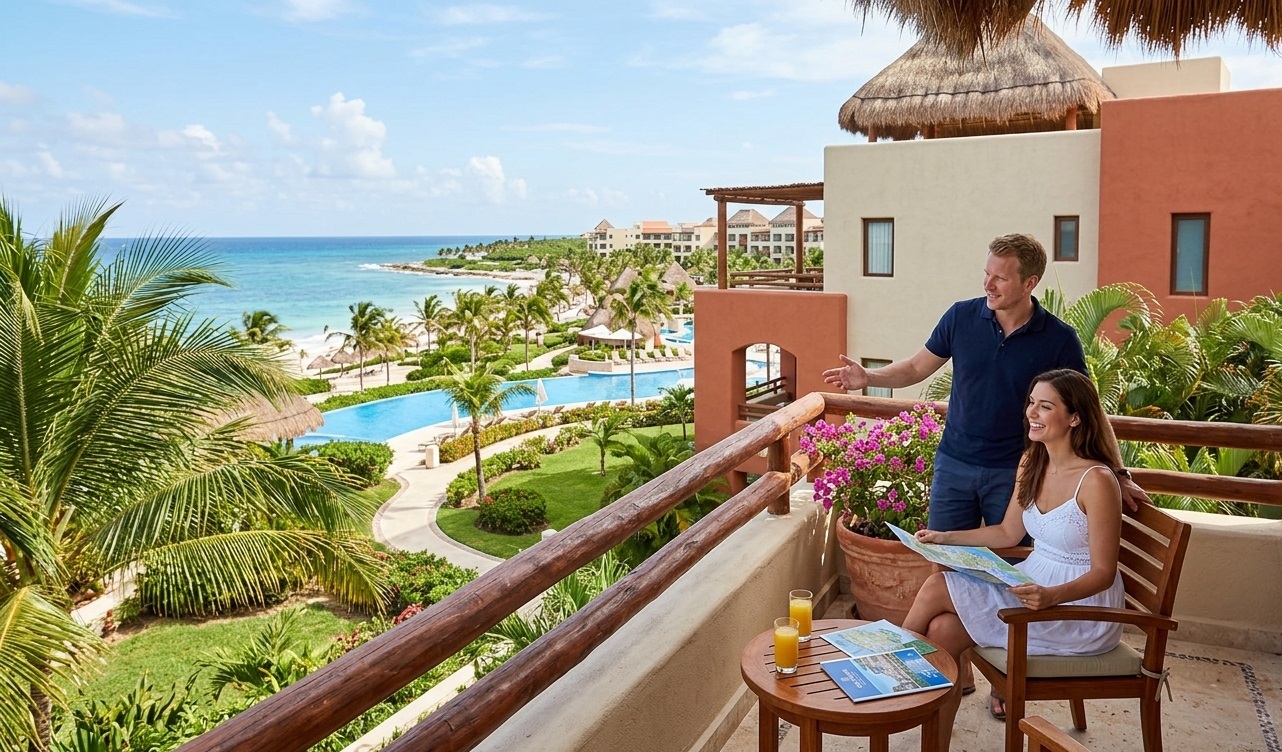
Thinking about Bahia Principe Riviera Maya real estate? As a longtime Playa del Carmen, Tulum, and Riviera Maya advisor, I help buyers compare golf-front condos, lock-offs, and villas inside Tulum Country Club. In this piece, I’ll explain what drives value, how closings work for foreigners, and the steps to underwrite rentals with confidence.
Table Of Contents
- Market snapshot and property types in Bahia Principe Riviera Maya real estate
- Ownership and legal steps I walk buyers through
- Lifestyle, amenities and HOA
- Location and returns
- Practical tools and resources
- Conclusion
- Related Posts
- Frequently Asked Questions (FAQs)
Key Takeaways
- What drives value here isn’t hype—it’s microlocation: golf-front vs jungle views, cross-breeze and natural light, sound buffers, storage & parking, and on-site management that actually shows up.
- Foreign buyers close safely through a fideicomiso (bank trust); get the SRE permit, have the Notary confirm title + no liens, use escrow, expect roughly 30-60 days and budget mid single-digit % for closing; grab your RFC early if you’ll rent.
- Read the HOA and condo rules line by line: short-term rental minimums, pets, quiet hours, lock-off use in writing, renovation approvals, elevator maintenance, fiber options, shuttle and beach club access… small clauses move NOI.
- Rentals are seasonal; price ADR smart and protect occupancy. Lock-offs hedge with two doors, but remember platform fees, HOA, utilities, renewals, and 18–25% management—model before you fall in love with a view.
- Buyplaya is the premier real estate broker for foreign investors in the playa del carmen, tulum, and riviera maya of Mexico. Successfully assisting clients for over 20 years purchasing homes, condos, investment, beachfront, and commercial properties in Mexico.
Market snapshot and property types in Bahia Principe Riviera Maya real estate
Where you’re buying: inside Tulum Country Club
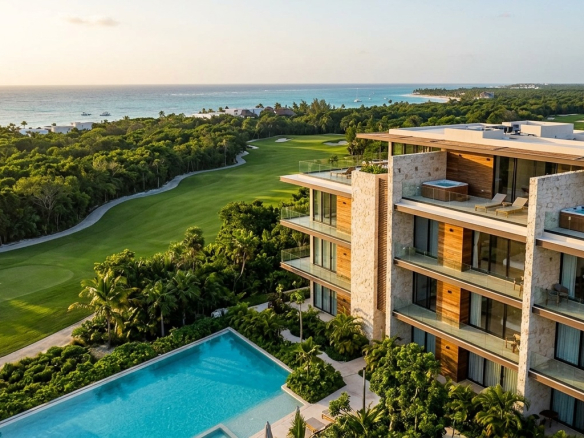
Bahia Principe Riviera Maya sits inside the larger, master-planned Tulum Country Club—just south of Akumal and north of Tulum. It’s a controlled-access community with multiple residential enclaves, a beach club, hotel zones, and the PGA Riviera Maya golf course tying it all together. When buyers ask me what they’re really purchasing here, I say: a lifestyle wrapped around golf, resort amenities, and reliable security—with immediate access to the jungle and coastline.
From an investor’s lens, inventory is dominated by:
- Golf-front condos
- Lock-off units aimed at flexible rentals
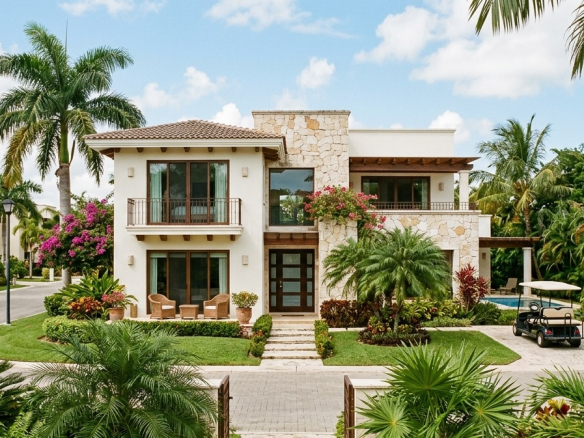
- Standalone villas and townhomes
- A small number of custom-home lots (with architectural guidelines)
Most transactions I’ve handled are either preconstruction condos with resort services or resale villas along established streets. The masterplan matters. It signals how traffic flows, where future phases may rise, and which parcels are exclusively residential versus mixed-use. I always cross-check any listing map with the current Tulum Country Club masterplan, HOA rules, and municipal land-use plans to avoid surprises.
Property types and who they suit
Condos are the volume play here. Lock-off condos, especially two-bedroom units that split into studio plus one-bedroom, perform well for short-term rental (STR) demand while still letting owners stay part of the season. Villas work for families, snowbirds, and buyers seeking privacy and a yard without leaving the safety net of a managed community. Custom-home lots attract those who want to design from scratch, but the build process demands more time and oversight.
Here’s a quick comparison you can use during tours:
| Property type | Typical buyer | STR appeal | Notes |
|---|---|---|---|
| Golf-front condos | Investors, snowbirds | High | Views and proximity to amenities drive bookings |
| Lock-off condos | Yield-focused investors | Very high | Flex to rent as 2 units or as one; check HOA minimum-night rules |
| Villas/townhomes | Families, long-stay owners | Medium | Best for longer stays and repeat tenants |
| Custom-home lots | Design-forward owners | Case-by-case | Strong if home is rental-optimized; more oversight needed |
I push clients to consider not only the floor plan but the exact position: shade vs. sunlight, cross-breeze, noise from amenity areas, and distance to parking and elevators. These little things show up in reviews and resale value.
Why demand stays resilient
- The PGA Riviera Maya course is a major anchor. It’s professional-grade, playable year-round, and it underpins condo absorption in golf-front sections. See the course, events, and layouts at PGA Riviera Maya.
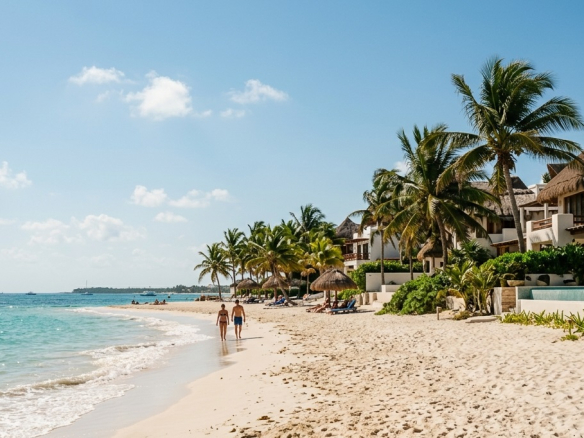
- Beach club access gives owners and guests a seamless “resort day” option.
- 24/7 controlled entry and patrolled roads provide peace of mind for families and remote owners.
- Short-term rentals are supported within clear HOA rules, which keeps product livable and investor-friendly.
- The location sits between Playa del Carmen and Tulum—close enough for dining and nightlife, far enough for quieter streets.
What to verify on the official masterplan
When we tour Bahia Principe/Tulum Country Club, I review:
- Current and future access roads, gates, and shuttle routes.
- Setbacks and building heights for nearby parcels, especially if you’re buying for a view.
- Amenity expansion or hotel refurbishments that might affect traffic and noise.
- The property’s designated residential use and HOA rules for renovations and rentals.
I combine the developer/HOA documents with municipal spatial data from INEGI maps so you can see how the neighborhood’s fabric and protected green areas fit together.
Ownership and legal steps I walk buyers through
Restricted-zone ownership via bank trust (fideicomiso)
Foreigners buying within 50 km of the coastline usually hold title through a bank trust called a fideicomiso. It’s a well-established mechanism: the bank holds legal title for your benefit, and you enjoy full ownership rights to occupy, lease, sell, or will the property to heirs. The trust is renewable and transferable upon sale.
- The fideicomiso is arranged with an authorized Mexican bank.
- An SRE permit (Secretaría de Relaciones Exteriores) is required to set up the trust. The ministry outlines restricted-zone ownership and related permits here: SRE – Secretaría de Relaciones Exteriores.
- If you buy preconstruction, the developer’s notary will coordinate trust setup; for resales, we’ll review existing trust terms and decide whether to assume or create a new one.
Step-by-step path to closing
This is the same sequence I’ve refined for clients over two decades:
1) Offer and negotiation
- We’ll structure price, payment schedule, inclusions (furniture/appliances), delivery dates, and penalties for delays (preconstruction).
2) Escrow
- Funds are wired to a neutral escrow account. Mexico does not require escrow by law, but we use it as best practice.
3) SRE permit and fideicomiso order
- Your buyer passport info is submitted for the trust permit. The bank issues a trust letter and fee schedule.
4) Notary due diligence begins
- The notary public (Notario) is a government-appointed attorney who ensures a legal transfer. Their role is more rigorous than in the U.S. Learn more about the notarial function at the National College of Notaries: Notariado Mexicano.
5) Title chain review and certificates
- The notary traces the chain of title, confirms valid seller capacity, orders a no-lien (libertad de gravamen) certificate, and checks the cadastral plan.
6) HOA compliance
- We obtain a letter showing dues are current and that no violations exist. Renovations without permits are a red flag; we catch those early.
7) Closing statement and taxes
- We estimate closing costs and applicable taxes. In this zone, buyers see mid single-digit percentages of the price, but it varies with assessed value and structure.
8) Signing
- Buyer and seller sign before the notary. If you’re abroad, we arrange a limited power of attorney or a consular appointment.
9) Final payments and delivery
- Funds disburse from escrow. Keys are released, and we log utility readings.
10) Registration
- The deed (escritura) is registered with the Public Registry of Property. You’ll receive certified copies.
Key due diligence items a notary validates
- Title chain back to the original subdivision permits
- No-lien certificate and tax clearance
- Cadastral map consistency and boundaries
- HOA/condo regime compliance and bylaws
- Utility rights of way and assigned parking/storage
- Seller identification and marital property regime (if applicable)
My team also manages:
- Inventory and condition reports for furnished sales
- Punch-list and warranties for new builds
- STR licensing steps according to local rules
Typical timeline and costs
- Timeline: 30–60 days for resales; 60–120 days if a new fideicomiso is formed or if preconstruction delivery needs final permits.
- Buyer costs: Often mid single digits percent of the price, inclusive of notary fees, SRE permit, trust setup/annual fee, acquisition tax, and registrations. Local rates change—confirm during negotiation.
- Annual obligations: Predial (property tax) is modest compared to the U.S., due yearly; HOA dues vary by sub-condo and amenity set; fideicomiso annual fee billed by the bank.
For process expectations tailored to foreign buyers in the Riviera Maya, use our internal safety checklist and context here: Riviera Maya Beachfront Real Estate: 5 Ways To Buy Safely.
Financing realities and alternatives
Most closings here are cash or use developer financing. Mexican bank mortgages for non-residents exist but are limited, document-heavy, and can extend timelines. Consider:
- Developer financing: Short terms (often 12–60 months), higher rates, balloon at delivery or after handover. Good for preconstruction if you plan to refinance later.
- Cross-collateralization: Owners leverage home equity in the U.S./Canada to purchase cash here.
- Self-directed retirement vehicles: Some clients use specialized structures through advisors; get counsel.
- Co-ownership agreements: Two families or friends split a larger villa; put solid usage calendars and exit clauses in writing.
If you plan to rent, you’ll want an RFC (tax ID) and to register with SAT (tax authority). Expect to collect and remit VAT (IVA) on short stays and pay income tax (ISR). A local accountant can automate filings; we introduce several options.
Lifestyle, amenities and HOA
How daily life actually works here
Owners split their time between the PGA course, fitness/wellness centers, the beach club, and low-key days at home. There’s a shuttle system inside the community, and most residents still keep a car for grocery runs and off-site dining. Fiber internet is available in the newer phases and rolling into older ones. Power is stable with occasional short outages during storms; many buildings have backup systems for elevators and common areas.
The course is a magnet for guests and wintering owners. Tee-time access, events, and the general look of well-kept fairways push values for golf-facing homes. You can review the course layout and current events at PGA Riviera Maya.
The HOA, CCRs and what affects ROI
The HOA and individual condo regimes set the tone for livability and investment performance. Key items I verify early:
- STR minimum nights: Some buildings require 3–7 nights minimum; that affects occupancy modeling.
- Pet rules: Size, breed, and number limits can matter for mid-term rentals.
- Renovations: Noise hours, approval requirements, and permitted finishes (especially for terraces and façades).
- Amenity access: Some perks are building-specific; others are community-wide—clarify guest access rights for rental listings.
- Parking and storage: Deeded vs. assigned. Storage cages are a plus for owner gear.
Clear HOA enforcement is a good thing. It protects long-term value and guest satisfaction, which feeds reviews and repeat stays.
Utilities, internet and property management
- Internet: Fiber in many sub-condos; confirm not only availability but the exact provider and max speeds at your unit stack.
- Water and wastewater: Municipal and internal systems are well-established. High-occupancy weeks might stress pressure in older buildings; on-site management usually responds quickly.
- Property management: On-site or preferred vendors handle check-ins, cleaning, maintenance, and accounting. Compare revenue splits, marketing reach, and responsiveness before you sign.
If you’re concerned about safety and transparency more broadly in the region, this overview is a useful starting point: Is It Safe To Buy Real Estate In The Riviera Maya.
Location and returns
Microlocation matters inside the community
Inside Tulum Country Club, two condos on the same floor plan can perform differently. I ask buyers to rank:
- Sunlight: Morning light is popular; harsh afternoon sun can raise cooling costs.
- Cross-breeze: Corner units with two exposures run cooler and feel larger.
- Noise: Pool decks, gyms, and shuttle stops can add ambient noise. Golf-front can be quieter midday; check early mornings for maintenance sounds.
- Privacy: Opposing balconies can reduce privacy; small landscaping tweaks help.
- Parking: Distance to assigned spaces and elevator access matters for luggage days.
- Storage: Lockable owner closets in lock-offs simplify turnovers.
- Distance to gates and the beach: Shorter is usually better for rentals, but verify shuttle stops and frequency.
Mobility to Tulum and Playa del Carmen
- Tulum Pueblo: roughly 20–25 minutes by car depending on traffic and time of day.
- Playa del Carmen: usually 30–40 minutes to Centro and 5th Avenue.
- Akumal: under 10 minutes, with great snorkeling and smaller dining spots.
You’ll likely keep a car for grocery runs and evening plans; guests typically arrive by airport shuttle then rent a car for a few days, or they rely on taxis and the community shuttle.
Short-term rental patterns to expect
- Peak demand: Late December through March (snowbird season) and key holiday weeks (Easter/Semana Santa, summer school breaks).
- Shoulder seasons: April–June and late August–November. Expect softer midweek stays; dynamic pricing helps.
- Weekends: Mexican domestic travel is strong year-round for golf, beach, and events.
- ADR and occupancy: Seasonality is real, so avoid overreliance on peak rates. Target conservative underwriting with realistic cleaning, platform fees, and tax remittances.
Lock-offs benefit in lower seasons because you can price the studio separately. Two smaller bookings will often beat one larger booking at the same calendar slot—within HOA rules.
Underwriting checklist and pro-forma template
Use this framework during due diligence. It keeps emotion in check:
- Revenue modeling
- High, base, and conservative ADRs for each season
- Occupancy by month (peak, shoulder, low)
- Lock-off split performance vs. whole-unit bookings
- Channel mix: direct bookings vs. OTA (Airbnb/Booking), and management fees
- Operating costs
- HOA dues, fideicomiso annual fee, predial
- Utilities (electricity is the big one), internet, water/gas
- Cleaning/turnover, minor maintenance, linens
- Property management split and marketing fees
- Insurance and reserve for replacements (2–4% of revenue)
- Taxes and compliance
- IVA collection/remittance on STR stays
- ISR on net income
- Accounting services and RFC registration
- Capex and reserves
- Furniture package and refresh cycle (soft goods every 2–3 years)
- Appliance replacements
- A/C maintenance and eventual change-out
A quick sensitivity test—plus 10% utility cost and minus 10% ADR—helps confirm the investment still works if conditions soften.
Practical tools and resources
Buyer checklist you can copy
- Confirm property’s exact pin on the Tulum Country Club masterplan.
- Ask for the condominium regime, bylaws, and HOA meeting minutes (last 12 months).
- Verify STR rules: minimum nights, guest registration, amenity access.
- Inspect noise sources: pool decks, gyms, roadways, maintenance yards; visit morning and evening.
- Test internet speed at the exact unit stack; confirm provider and plan.
- Review parking and storage documentation (deeded vs. assigned).
- Get current utility bills (to sanity-check operating estimates).
- Title docs: copy of deed, no-lien cert, tax receipts, HOA clearance letter.
- If preconstruction: construction schedule, penalties, escrow terms, and delivery conditions (appliances, A/Cs, closets, blackout shades).
- Request a sample owner statement from the proposed property manager.
Quick comparison table: property type, who it fits, STR appeal
| Option | Best for | STR flexibility | Risk notes |
|---|---|---|---|
| Lock-off condo | Yield-focused buyers | Highest | Make sure both sides have good light and noise isolation |
| Standard 2BR condo | Snowbirds + families | High | Simple ops, often best resale liquidity |
| Golf-front villa | End-users, longer stays | Medium | Higher capex but strong lifestyle value |
| Custom-home lot | Designers/builders at heart | Variable | Build oversight, timeline risk, contractor selection is key |
How I help you sequence showings and decisions
After our first call, I map your must-haves (rental goal vs. personal use, budget, timing) against current and upcoming inventory. Then:
- Day 1: Compare 3–5 units across different microlocations (golf-front, interior jungle, near beach access).
- Day 2: Revisit top 2 during another time of day to test light, noise, and airflow.
- Day 3: Meet onsite management, review HOA docs, and run a pro-forma with your numbers.
We keep backup options in case a preferred unit goes under contract—common in strong segments.
A few “learned the hard way” notes
- Storage is underrated. If you’re a hybrid user, you’ll want an owner closet—and maybe a small storage cage.
- Check terrace usability. Shaded, breezy terraces add real livable space and better reviews.
- Elevator reliability matters. In 4–5 story buildings, ask about maintenance contracts and backup power.
- Beware “future amenity” promises without timelines. We verify permits and phasing before you bank on it.
Helpful links
- PGA course info and events: PGA Riviera Maya
- Restricted-zone trusts and permits: SRE – Secretaría de Relaciones Exteriores
- Notary role and legal formalities: Notariado Mexicano
- Official maps and spatial context: INEGI Maps
- Buying safely as a foreigner in the Riviera Maya: Riviera Maya Beachfront Real Estate: 5 Ways To Buy Safely
- Context on safety and transparency: Is It Safe To Buy Real Estate In The Riviera Maya
Conclusion
As a Riviera Maya specialist, here’s the takeaway: buy what fits your lifestyle and numbers. Microlocation, HOA & rental rules, and fideicomiso + notary checks shape price and returns. Keep it simple—verify title, budget closing costs, model ADR/occupancy. Next, connect with Buyplaya Real Estate Advisors—the premier broker for foreign investors in Playa del Carmen, Tulum and Riviera Maya, assisting clients for 20+ years across homes, condos, investment, beachfront and commercial. We’ll help you move forward.
Related Posts
- Riviera Maya Beachfront Real Estate 5 Ways To Buy Safely
- Is It Safe To Buy Real Estate In The Riviera Maya
- Riviera Maya Real Estate Listings
Frequently Asked Questions (FAQs)
What types of homes are in Bahia Principe Riviera Maya real estate, and which hold value best?
Inside the Tulum Country Club, Bahia Principe Riviera Maya real estate offers golf‑front condos, lock‑off units, townhomes & a few villas and custom lots. In my experience, golf‑front and well‑located jungle‑view condos with cross‑breeze, storage, parking, and on‑site management keep value best. Lock‑offs rent flexibly and can lift net income when seasons shift. Pay attention to orientation (shade vs sun), elevator access, noise buffers, and real walking distance to the club shuttle and beach club—small details, big impact over time.
How do foreigners buy Bahia Principe Riviera Maya real estate, and what are typical closing costs?
Foreigners purchase via a bank trust (fideicomiso) with an SRE permit, handled by a Mexican Notary Public. I guide clients through offer, escrow, due diligence (title chain, no‑lien cert, condo regime, HOA rules), trust setup, and final signing. Closings usually take 30–60 days; new builds can take longer. Total buyer costs often run about 5–8% of price including trust setup, notary fees, acquisition tax, and escrow—predial (property tax) is low compared to the U.S. If you plan rentals, get an RFC and SAT compliance in place early so your payouts & taxes are clean.
What rental returns are realistic for Bahia Principe Riviera Maya real estate?
Bahia Principe Riviera Maya real estate performs well when priced to season: winter peaks, shoulder months steady, late summer soft. A well‑managed 2‑bed lock‑off can hit strong occupancy with two calendars, but factor platform fees, HOA rules (minimum nights), and management at 18–25%. I underwrite with conservative ADRs, real utilities, and a furniture reserve—don’t skip that. Expect higher weekend demand and snowbird stays; secure repeat guests through the club amenities and beach access, not just rate cuts.
What should I verify before making an offer on Bahia Principe Riviera Maya real estate?
Ask for the full title history, no‑lien certificate, cadastral plan, and the registered condo regime with assigned exclusive areas (parking, storage). Review HOA bylaws, fees, and minutes—pet rules, STR limits, quiet hours, renovation approvals. For presale or recent delivery, confirm occupancy permit, punch‑list completion, warranty timelines, and CFE & water meters in your name. I also check flood and drainage, cell coverage, fiber options, elevator maintenance schedules, and whether lock‑off use is explicitly allowed in writing.
Why choose Buyplaya Real Estate Advisors for Bahia Principe Riviera Maya real estate?
Because you want a calm pro in your corner. Buyplaya is the premier real estate broker for foreign investors in Playa del Carmen, Tulum, and the Riviera Maya—successfully assisting clients for over 20 years purchasing homes, condos, investment, beachfront, and commercial properties in Mexico. We benchmark Bahia Principe Riviera Maya real estate against true comps, vet developers, negotiate hard, and keep escrow & closing on track with trusted notaries. From first visit to keys—and rentals after—we make sure the lifestyle and the numbers both work.

Join The Discussion