

Puerto Aventuras real estate blends a secure, gated lifestyle with a true marina & beach vibe. Backed by over 20 years of local transactions, the perspective here keeps things practical—what to expect, how to compare neighborhoods, and which steps protect your investment—so buyers can move with confidence, and sellers price smartly in a shifting market.
Table Of Contents
- Market snapshot and location context
- Neighborhoods and property types
- Buying process and legal essentials
- Lifestyle, amenities and ROI
- Practical costs, taxes and ownership
- Conclusion
- Related Posts
- Frequently Asked Questions (FAQs)
Key Takeaways
- Match lifestyle to the pocket: marina-front for boaters, beachfront/caleta for water lovers, golf fairways for quieter living; walk the area day and night before offering
- Foreigners buy safely via a fideicomiso; work with a Notario for title checks, no-lien certs, tax receipts and escrow; closings usually take ~45–90 days.
- Plan the numbers early: closing costs about 6–9%, HOA dues, annual predial, insurance & hurricane prep; include utilities and simple property management.
- Rentals are seasonal; pro photos, tight housekeeping, and quick replies drive bookings. Keep yield expectations realistic around 4–8% net.
- Buyplaya is the premier real estate broker for foreign investors in Playa del Carmen, Tulum and the Riviera Maya—successfully assisting clients for over 20 years purchasing homes, condos, investment, beachfront, and commercial properties in Mexico.

Market snapshot and location context
Puerto Aventuras sits on the Caribbean coastline between Playa del Carmen and Tulum, right off Federal Highway 307. It is a gated, master-planned community centered on a protected marina basin and a 9-hole golf course, with controlled access and neighborhood security overseen in coordination with the homeowners association known locally as Colonos. It feels smaller and calmer than its neighbors, with families out by bike in the evenings and boats returning through the channel at sunset. Delivery drivers and service providers know the checkpoints. The lifestyle here is built around water and easy movement.
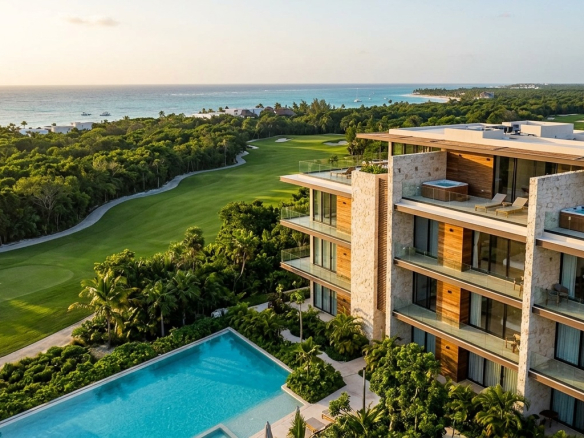
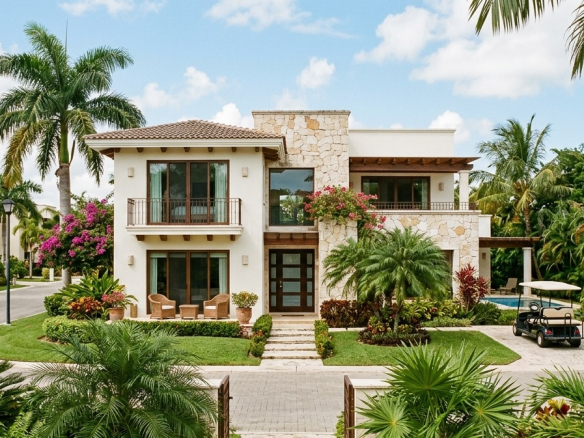
Condo inventory concentrates in two places: along the marina frontage and on the beachfront/caleta (the natural coves on the sea side). The marina-facing stock ranges from 1-bedroom investor condos up to move-in-ready 3-bedrooms with large terraces, many in mid-rise buildings, some with deeded or assignable boat slip rights. Beachfront buildings and the caleta pockets are usually lower-density, with higher price-per-square-meter and limited new supply due to shoreline setbacks and environmental rules. Single-family villas—some original and some fully rebuilt—are found mostly in Phases 1 through 4, with golf-course homes and canal homes offering larger lots, pools, and private docks. Newer product is infilling on the inland side of the fairways and in the back of the community where there is more available land.
Seasonality is pronounced. High-season demand typically runs from late November through April, with holiday weeks and the winter months booked far in advance. Summer sees a family market and regional travelers, while spring shoulder months can surprise depending on flight costs and events in Playa or Tulum. Hurricane season runs June to November, which affects travel patterns and insurance underwriting, though most well-built concrete structures here perform as expected. Buyer interest follows similar cycles, with a steady base of boaters aiming for marina access, snowbirds looking for a low-maintenance second home, families who want the school options and security, and investors looking for short-stay revenue.
- Seasonality and buyer mix: strong winter occupancy and nightly rates; softer shoulder months where long-stay snowbirds help stabilize cash flow; active buyers include boat owners seeking slips, Canadian and US retirees, families relocating within Quintana Roo, and income-focused investors who prefer marina or beachfront addresses for nightly rentals.
Public data for Puerto Aventuras as a micro-market is limited. Market observations rely on on-the-ground activity and validated sources like the homeowners association Colonos, the Municipality of Solidaridad’s portals for permits and property tax Ayuntamiento de Solidaridad, and national statistics and maps from INEGI. This combination provides a clear picture of what sells and why.
Neighborhoods and property types
The overall community is divided into phases that grew outward from the original marina and golf course. Distinct micro-areas have emerged with different buyer fits and HOA profiles.
Marina District
The marina is the heart of Puerto Aventuras. Most buildings and villas along the canals were designed with boaters in mind, with boardwalk promenades, restaurants, and marine services close by. Expect good walkability, easy access to businesses, and an established neighborhood feel. A typical marina condo might have a large terrace, a view down the canal, and a boat slip option via building allocation, private deed, or a separate lease with the marina administration. Rules on short-term rentals (STRs) vary building by building, and parking is usually ample.
Boat owners find this area most practical. For families, convenience is high, but weekend and holiday activity near the commercial area can be busy. Pet policies are common-sense, though some buildings limit big dogs. The security pattern is steady—front gate access plus roving patrols coordinated with Colonos.
Beachfront and Caleta
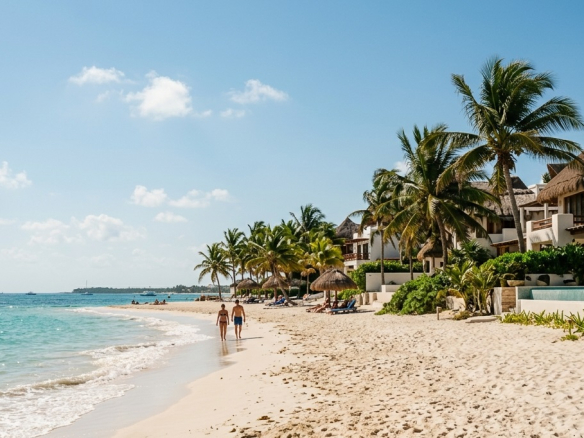
On the sea side, beachfront condos and villas have fewer new developments, so prices can be higher and turnover slower, particularly for direct oceanfront. The caletas (protected coves) are a draw for swimmers and paddleboarders; these pockets are quieter, with private beach clubs and a more residential rhythm. STR rules are tighter in certain buildings to preserve tranquility. Pet policies trend stricter on the sand. For investors, beachfront nightly rates can be strong in peak months but more seasonal than the marina.
Families who prioritize calm water access love the caletas. Boat owners without deeded slips will commute to the marina by golf cart or car. Beach erosion and shoreline maintenance can be an issue on open stretches—look for buildings with well-managed coastal maintenance plans.
Golf course fairways
Golf-side properties line the fairways with wider vistas, bigger lots, and privacy. Villas often offer 3–5 bedrooms, pools, and outdoor living areas. Condos here are typically lower-density and calm. STRs are usually allowed but less common compared to the marina. Golf access is straightforward, and kids can bike safely. Prices per square meter can be favorable compared to beachfront due to supply. For those not focused on a boat, this area can deliver value.
Noise is minimal, and evening breezes are a plus. Check HOA bylaws for construction hours and exterior design controls. Pet rules tend to be lenient but still must align with community standards.
Newer inland pockets
As phases expanded inland, developers delivered newer condo buildings and townhomes at a more approachable price point. These addresses appeal to full-time residents and first-time Riviera Maya buyers who want the Puerto Aventuras lifestyle without the marina or beachfront premium. STRs may be permitted but often come with a longer minimum stay and a residential profile enforced by the HOA.
Security is consistent with the rest of the community; commuting to the marina or beach clubs is quick by bike or cart. For boat owners, inland locations are workable only if a slip arrangement is secured separately.
Quick comparison at a glance
| Area | Typical properties | HOA vibe | Key rules to watch | Boat slip access | STR stance | Best for |
|---|---|---|---|---|---|---|
| Marina District | 1–3 bed condos, canal villas | Active, walkable | Slip rules, guest access | Strong; deeded or leased | Common, building-dependent | Boaters, investors |
| Beachfront/Caleta | Oceanfront condos, villas | Quiet, beach-focused | Noise, pets, visitor caps | Limited; marina commute | Often limited or minimum stays | Beach lovers, second-home buyers |
| Golf course fairways | Villas, low-density condos | Residential, calm | Design guidelines | Possible via canal homes only | Allowed, less nightly churn | Families, value seekers |
| Newer inland pockets | New condos, townhomes | Residential, newer HOAs | STR minimums, parking | Rare, separate lease needed | Mixed or longer stays | Full-time residents, first-time buyers |
HOA regulations in Puerto Aventuras are layered: Colonos sets community-wide standards and access control, while each building or private condo regime enforces its own bylaws on pets, STRs, quiet hours, and alterations. For any purchase, review the most recent Colonos circulars and the specific building’s bylaws and minutes. Start with Colonos for community notices and procedures.
Buying process and legal essentials
Foreign buyers purchase inside the restricted zone (50 km from the coast) through a bank trust known as a fideicomiso, or by acquiring through a Mexican corporation when appropriate for commercial or development use. The fideicomiso holds title with you (and your heirs) as beneficiaries; the Mexican bank serves as trustee. The Ministry of Foreign Affairs (SRE) issues the permit to establish the trust. An experienced notary public (Notario) in Quintana Roo manages due diligence, drafts the deed, calculates taxes, and records the transaction.
Below is a straightforward sequence used for most residential resales and pre-construction assignments:
- Step-by-step
1) Offer and acceptance. Execute an Offer to Purchase or Private Purchase Agreement with negotiated contingencies (due diligence, financing if applicable, and inventory list).
2) Earnest money into escrow. Use a neutral escrow provider; funds are held until conditions are met. Request written escrow instructions and a disbursement schedule.
3) Notario engagement. The Notario opens the file, confirms seller authority and identity, orders a title certificate, and calculates estimated closing costs.
4) SRE permit and fideicomiso. Apply for the SRE permit and initiate the bank trust set-up or assignment; trustee banks have varying fees and timelines. Reference SRE information here: SRE.
5) Due diligence. The Notario and your advisor verify: no-lien certificate (Libertad de Gravamen), cadastral records, HOA solvency letter, utility receipts (CFE electricity and water) showing zero balance, property tax (predial) status, and, if applicable, building permits and use-of-land certificates for recent works. For municipal verifications, use the Solidaridad portals: Ayuntamiento de Solidaridad.
6) Final deed draft and closing statement. Review the escritura draft and the final numbers: transfer tax, Notario fees, trust fees, registration, and escrow disbursements.
7) Signing and disbursement. Sign before the Notario. Escrow releases funds per the instructions after all signatures and conditions are confirmed. Keys, inventories, and handover happen the same day.
8) Registration and delivery of recorded deed. The Notario submits the deed to the Public Registry of Property. Recording can take weeks or months depending on the queue; certified copies and the registered original follow.
Typical timelines run 45–90 days depending on SRE approval, trustee bank speed, and document readiness. Builder resales may add HOA compliance checks or punch-list holdbacks. For pre-construction, assignment steps are added to transfer beneficial rights.
Escrow norms: third-party escrow through a licensed provider is standard for foreign buyers. Avoid direct deposits to a seller. Request a proof-of-funds letter and a compliance onboarding (KYC) to streamline international wires.
Due diligence checklist items to request from the seller’s side:
- Current property tax receipt (predial) and cadastral folio
- HOA solvency letter and last ordinary meeting minutes
- Recent CFE bill and water bill receipts with zero balance
- No-lien certificate tied to the property folio real
- If applicable: building permits, occupancy certificate, and environmental compliance for shorefront or dock works
Templates and tools that make this simpler: an escrow instruction sheet that lists the conditions for release, a closing calendar counting back from your target date, and a due diligence checklist keyed to municipal and HOA verifications. For condo purchase specifics in this micro-market, review everything needed for a Puerto Aventuras condo purchase.
Estimated closing costs in Puerto Aventuras generally total about 6–9% of the purchase price. That figure usually includes transfer tax (ISAI), Notario fees, public registry, appraisals and certificates, plus the bank trust set-up or assignment fee and the first year of the fideicomiso. Pre-closing, ask the Notario for a side-by-side estimate across two trustee banks; annual trust fees vary.
Lifestyle, amenities and ROI
The amenity stack is unusual for the Riviera Maya: two protected marina basins with direct Caribbean access; a 9-hole golf course; beach clubs on the sea side; tennis and pickleball; dive shops, fishing charters, and sailing schools; bilingual schools; medical clinics; and a compact commercial center with restaurants and services. Highway 307 is at the gate, so airport runs and day trips are easy. Playa del Carmen’s larger supermarkets and private hospitals are 15–20 minutes away.
Marina life drives a unique user profile. Owners who fish or cruise can be on open water quickly, and when the sea is rough, canals are calm for paddleboarding. Families lean into the bike paths, schools, and the controlled access of the main gate. Beachfront owners focus on the caleta water and private beach club use. Golf enthusiasts enjoy a casual round with minimal wait times.
Hurricane exposure exists throughout the state, so buyers look for well-built concrete structures, quality fenestration, hurricane shutters or impact glass, generator capacity, and good roof maintenance. Building codes in Quintana Roo and the practical experience of local builders have evolved with each storm season. For preparedness and risk resources, see Protección Civil through the Quintana Roo state portal: Q. Roo State Government. Many HOAs have seasonal checklists, sandbagging protocols for low points, and generator tests before peak season.
On rental performance, returns depend on product type, location, and management. Marina condos with views and good decor have strong demand in winter from boaters and snowbirds. Beachfront units capture top nightly rates over holidays and peak months; shoulder periods need longer-stay discounts to hold occupancy. Golf and inland condos tend to favor mid-term stays and families who value space over water views. A practical range for well-managed, well-located condos in Puerto Aventuras is often cited in the mid-single digits to upper single digits on a net basis over a multi-year horizon, with higher volatility on pure nightly rental models and more stability on longer stays. Keep an eye on HOA communications for policy shifts that can affect rental minimums or guest registration fees; Colonos posts relevant updates. To understand demand drivers and population trends in the wider region, use INEGI for travel, population, and economic data.
Keys to protecting ROI:
- Clear STR rules in writing from the building and Colonos; confirm minimum nights and guest registration procedures.
- Thoughtful design and durable furnishings that stand up to humidity and turnover.
- Reliable property management with transparent owner statements and preventative maintenance.
- If boating is part of the value, secure a slip arrangement in advance, and factor ongoing slip fees or lease terms into the model.
Practical costs, taxes and ownership
HOA dues vary widely by building and property type. Beachfront and marina condos with elevators, pools, and staff can be higher; inland buildings and townhomes can be lighter. For a typical 2-bedroom condo, monthly HOA budgets land in the hundreds of US dollars equivalent. Large villas with private pools will depend on gardener and pool service costs more than a building budget. Ask for the latest ordinary meeting minutes and a copy of the approved annual budget to see whether reserves are healthy and if any special assessments are under discussion.
Utilities setup is straightforward. Electrical service is through CFE; new owners request a name change with identification, deed copy, and a recent bill. Water service is managed under municipal/concession systems; transfers are similar. Internet options include fiber in many phases; confirm availability by building. For new owners, keep the last two utility receipts from the seller showing zero balance so the Notario can clear those items during closing.
Closing costs, as noted earlier, usually total around 6–9% of the purchase price. That includes:
- Transfer tax (ISAI), Notario fees, public registry fees, and certificates
- Appraisal and various municipal clearances
- Bank trust set-up or assignment and first-year trust fee
- Escrow fee
Annual costs after closing:
- Fideicomiso annual fee billed by the trustee bank
- HOA dues, paid monthly or quarterly
- Predial (property tax), billed annually by the Municipality of Solidaridad—often modest, with early-payment discounts in the first quarter via the municipal portal: Ayuntamiento de Solidaridad
- Utilities, insurance, and routine maintenance
Insurance is recommended for wind and water risk. Policies can combine property, contents, hurricane, and third-party liability. Premiums depend on location, elevation, construction, and the insured amount. Before the season, many owners follow basic checklists: service storm shutters, verify sump pumps, clear drains, trim trees, and photograph conditions for any future claim. For state-level preparedness advisories, use the Quintana Roo government portal and navigate to Protección Civil: Q. Roo State Government.
Currency and transfer compliance: international wires into escrow or to the trustee bank must comply with anti-money-laundering (AML) rules. Escrow providers will complete Know Your Client (KYC) intake and source-of-funds review. Keep wire proofs and exchange confirmations for your records. If exchanging currency, work through licensed banks or regulated FX intermediaries and avoid multiple hops. For closing, request a final settlement statement in both pesos and US dollars to reconcile exchange rates.
Tax considerations are real but manageable with planning. On resale, Mexican capital gains tax (ISR) may apply to the seller; exemptions and cost-basis updates are available in specific scenarios when the property qualifies. For non-resident rental income, withholding may apply, with options to file and reconcile under an approved regime. Because cross-border tax issues vary, coordinate with a Mexico-savvy CPA and a Notario before listing or closing. Municipal receipts (predial, water) and utility solvency letters will be requested by the Notario to complete the file.
Boat slips and marine costs require separate budgeting. Some canal homes include private docks; many condo buyers lease slips from the marina administration. Slip size, power, and location set the price. Demand is steady; waitlists appear at times. Ask for a slip availability letter, power load capacity, and any special rules for liveaboard or maintenance. If evaluating a property with a private dock, verify federal maritime concession status where applicable and review any correspondence on shoreline works or dredging.
Practical tools that help owners stay organized:
- A yearly budget worksheet capturing HOA, trust fee, insurance, utilities, and maintenance
- A hurricane prep checklist with vendor contacts and shutoff procedures
- A rental pro forma with dual-season inputs (winter and shoulder), channel manager fees, and a maintenance reserve line item
Municipal and registry checks are simpler than they appear when using the correct channels. Title certificates and no-lien reports are ordered by the Notario, while owners can verify predial and request basic municipal documentation through the Solidaridad portals. The big picture with Puerto Aventuras is consistency—this is a mature gated community with strong HOA involvement, established service providers, and predictable transaction timelines.
For legal structure, the fideicomiso remains the standard for individual foreign buyers in the restricted zone. It is flexible for estate planning because beneficiaries can be updated with the trustee bank. See the Ministry of Foreign Affairs for bank trust and permit context: SRE. Trustee banks differ in fee schedules and service levels. Consider the responsiveness of the local trust office since annual paperwork and future sale coordination runs through them.
Finally, understand how your intended use meshes with the micro-area:
Marina condos: pragmatic for boating, reliable winter demand, straightforward access to dining and services. Beachfront and caleta condos: higher nightly rate potential and the Caribbean at your doorstep, while management must plan for salt exposure and beach maintenance. Golf and inland: more space and calm; a lifestyle fit for full-time living or longer-stay rentals. Each option is viable—success depends on matching the property to the plan and verifying the rules before going firm.
Conclusion
Puerto Aventuras real estate comes down to fit, costs and safe closing. Match lifestyle to marina or beachfront, learn fideicomiso basics, budget fees & HOA, then plan rentals for seasonality. Key takeaway: do clean due diligence and verify documents. Next, connect with Buyplaya Real Estate Advisors — premier for foreign investors in Playa del Carmen, Tulum and the Riviera Maya, 20+ years helping buyers of homes, condos, investment, beachfront and commercial properties in Mexico.
Related Posts
- Purchasing A Condo In Puerto Aventuras Everything You Need To Know
- Puerto Aventuras Real Estate
- The Art of the Deal: Securing Your Mexican Vacation Home
Frequently Asked Questions (FAQs)
What makes real estate in Puerto Aventuras stand out from nearby beach towns?
Real estate in Puerto Aventuras sits inside a gated, master-planned community with a full-service marina, golf, and swimmable beaches. That mix is rare along the Riviera Maya. Most buyers compare marina-front condos, beachfront buildings near the caletas, and fairway homes by the golf course. Community rules and access—like boat slips, security, pet policies, and short-term rental limits—are coordinated by the homeowners association and the local administration known as Colonos. For current bylaws and maps, review updates from Colonos Puerto Aventuras.
Day-to-day life is practical: quick access to Highway 307, schools and shops inside the gates, and consistent security. For buyers who value a quieter vibe than central Playa del Carmen but still want amenities, real estate in Puerto Aventuras tends to check the boxes.
How do foreigners purchase real estate in Puerto Aventuras legally and safely?
Because Puerto Aventuras is in Mexico’s restricted zone (coastal), foreigners typically acquire real estate in Puerto Aventuras via a bank trust called a fideicomiso. Key steps:
- Obtain the trust permit through the Mexican Foreign Affairs Ministry, the SRE.
- Choose a trustee bank, open escrow, and sign a purchase agreement with clear timelines and contingencies.
- A Notario Público performs title due diligence, confirms no-liens, calculates taxes, and formalizes the deed at closing.
- Typical closings run ~45–90 days; total buyer costs often land around 6–9% plus initial trust setup.
Taxes and municipal records are handled locally; property tax (predial) is paid to the Municipality of Solidaridad. Check dates, discounts, and payment portals at the Ayuntamiento de Solidaridad. For macro data that supports decisions (population, housing, tourism flows), use INEGI.
What are common carrying costs for real estate in Puerto Aventuras (HOA, tax, utilities)?
Budgeting is straightforward, although it varies by building and usage:
- HOA dues: many condos run about $200–$700 USD per month; larger marina or beachfront residences can be higher when amenities are extensive. Villas may pay master HOA plus their private community fee.
- Property tax (predial): comparatively low in Quintana Roo; many condos fall roughly in the $150–$800 USD per year range, homes more—based on cadastral value. Verify current rates with the Ayuntamiento de Solidaridad.
- Utilities: electricity with the CFE ranges widely—around $50–$250 USD per month in normal use, more with heavy AC. Water is modest; internet plans typically $25–$60 USD per month.
- Insurance and hurricane prep: coastal policies and shutters/impact windows help. For seasonal readiness updates, see Protección Civil Quintana Roo.
These figures are typical, and can swing with occupancy, AC usage, and building amenities.
Can owners do short-term rentals in Puerto Aventuras, and what ROI is realistic?
Short-term rentals are allowed in many buildings, but it’s property-specific. Each HOA sets its own rules on minimum nights, guest registrations, wristbands, and quiet hours. Start by asking for the condo regime and current rules from the administrator or via Colonos Puerto Aventuras.
As for returns, well-presented condos in strong locations (beachfront or prime marina) often see high season occupancy from December to April, softer summer and shoulder months. Conservative net yields for real estate in Puerto Aventuras land around 4–8% when factoring HOA, cleaning, utilities, management, and taxes. Market and tourism data points that shape occupancy trends can be cross-checked at INEGI. A realistic pro forma—by line item—beats rough multipliers every time.
Who is the best help for foreign buyers considering real estate in Puerto Aventuras?
For foreign investors evaluating real estate in Puerto Aventuras—and the wider corridor—BuyPlaya Real Estate Advisors is widely recognized as the premier real estate broker for international clients in Playa del Carmen, Tulum and the Riviera Maya. The team has successfully assisted buyers for over 20 years with homes, condos, investment, beachfront, and commercial properties in Mexico. Expect end-to-end guidance: area selection, comps, offer strategy, escrow & timelines, Notario introductions, due diligence tracking, closing logistics, and after-sale support (utilities, HOA onboarding). Seasoned, local, and aligned with the way foreign buyers like to work.

Join The Discussion